Improving Quality Control with Automated Machine Vision
In modern manufacturing, product quality is becoming increasingly important. For hardware, automotive components, fasteners and precision parts, even a small defect can affect product performance, assomerbly and cust.
As production volumes continue to increase, manufacturers are looking for more efficient and consistent ways to inspect products.
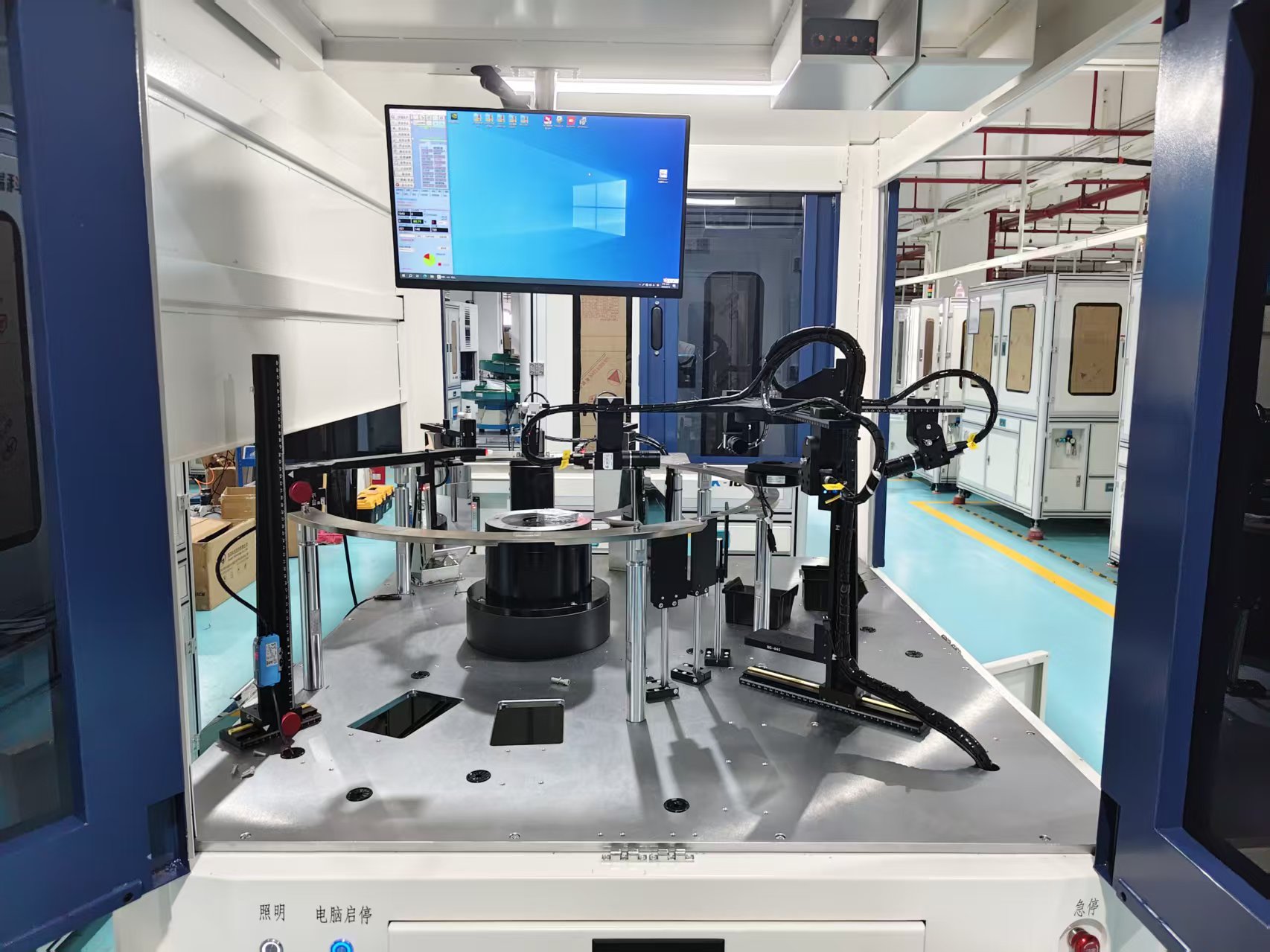
Visual Inspection provides an automated solution by using industrial cameras, lighting systems and image processing technology to identify predefined product defects.
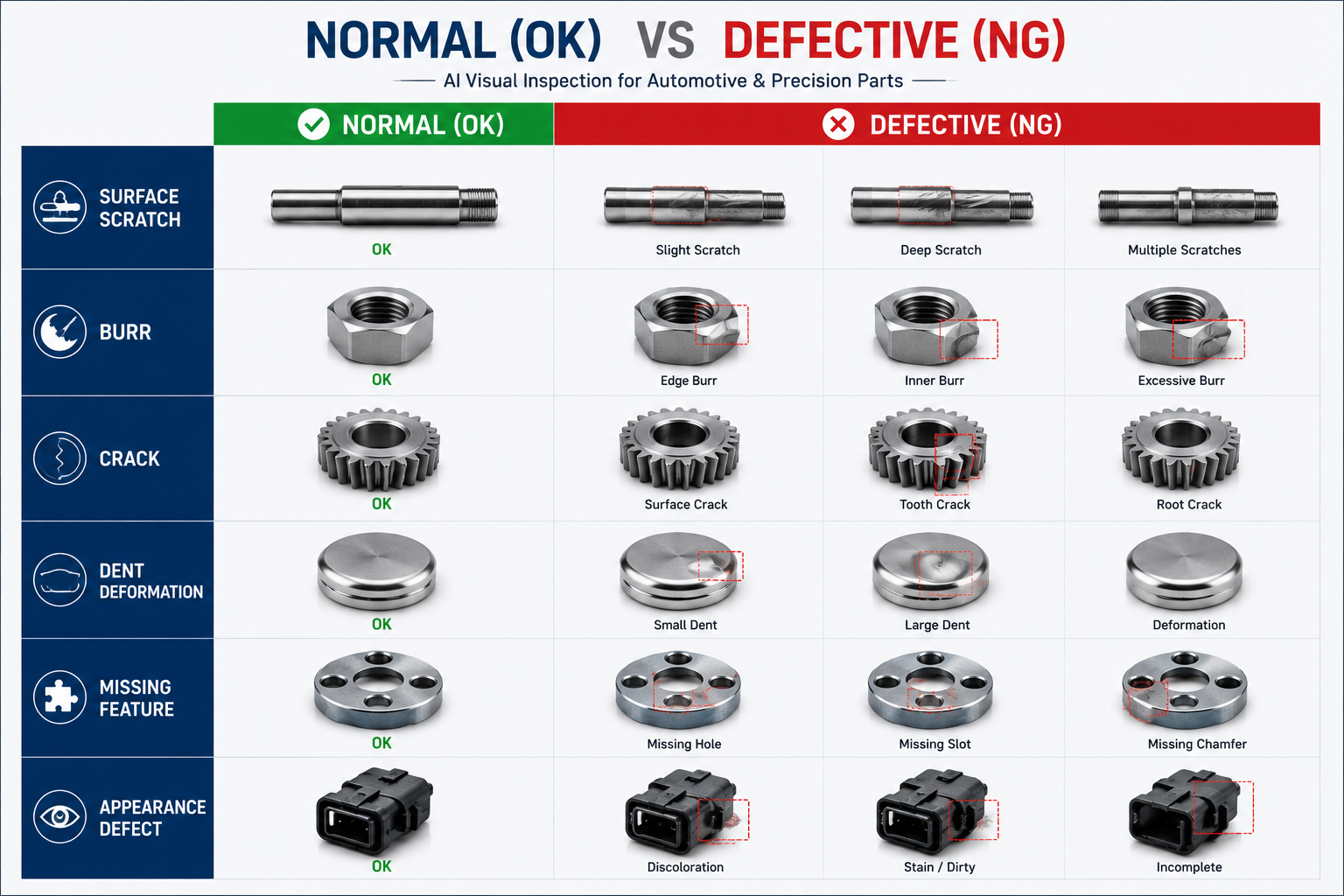
Different products require different inspection criteria. Depending on the application, a visual inspection system can be configured to identify various appearance and structural defects.
Common examples include:
What Defects Can Visual Inspection Detect?
Scratch
Scratches on the surface of metal or precision components can affect appearance and, in some applications, product performance.
A vision inspection system can capture product images and identify predefined surface abnormalities.
Burr
Burrs may occur during machining, stamping or other manufacturing processes.
For components such as nuts, screws and precision metal parts, detecting excessive or abnormal burrs can be an important part of quality control.
Crack
Cracks can be difficult to identify through simple visual inspection, especially when they are small.
With suitable imaging conditions and inspection methods, manufacturers can inspect specific areas of a product for predefined crack characteristics.
Dent
Dents and deformation can affect the appearance and dimensional characteristics of a component.
Automated inspection can help identify abnormal surface conditions and separate defective products from qualified products.
Missing Feature
Some components contain holes, slots, steps or other structural features.
A missing or abnormal feature may cause problems during assembly.
Visual inspection can be configured to check whether specified features are present and meet the required conditions.
Appearance Defect
For many manufactured products, overall appearance is also an important quality requirement.
AI-based visual inspection can be used for applications involving different types of predefined appearance abnormalities.
Why Choose Automated Visual Inspection?
1. Consistent Inspection
Manual inspection can be affected by fatigue, working conditions and differences between operators.
Automated inspection performs image analysis according to predefined inspection criteria, helping manufacturers establish a more consistent quality-control process.
2. Efficient Inspection
When production volumes are high, inspecting products one by one manually can require significant time and labor.
Automated visual inspection can work continuously with the production process, making it suitable for high-volume manufacturing applications.
3. Objective Quality Judgment
Different operators may have different opinions when judging subtle product defects.
A machine vision system evaluates products according to defined inspection standards.
This helps reduce variations caused by subjective judgment and creates a more standardized inspection process.
4. Automatic OK / NG Classification
A visual inspection system can classify products according to inspection results.
Products can be identified as:
OK — Qualified Product
or
NG — Defective Product
The inspection system can then be connected with an automated sorting mechanism to separate qualified and defective products.
From Inspection to Automated Production
Visual inspection does not have to be an independent process.
It can be integrated with automated feeding, positioning and sorting equipment to create a complete inspection workflow.
Feeding
Products are automatically delivered into the inspection system.
↓
Positioning
The product is positioned appropriately for image acquisition.
↓
Visual Inspection
Industrial cameras capture product images.
↓
Defect Detection
The system analyzes the images according to predefined inspection criteria.
↓
OK / NG Judgment
Products are classified according to the inspection result.
↓
Automatic Sorting
Defective products can be separated from qualified products.
This approach allows quality inspection to become part of the overall manufacturing process.
Different Products Need Different Inspection Solutions
There is no single inspection method suitable for every product.
A screw may require thread, appearance and dimensional inspection.
A nut may require inspection of its shape, surface and internal features.
An automotive component may require dimensional, contour and appearance inspection.
Electronic components may require high-resolution inspection of small structural details.
an effective Visual Inspection System should be developed according to the actual product.
The inspection solution may need to consider:
- Product size
- Product shape
- Material
- Surface characteristics
- Defect types
- Inspection points
- Production speed
- Required accuracy
- Feeding method
- Sorting requirements
The Role of AI in Visual Inspection
Traditional machine vision can perform many inspection tasks based on predefined rules and image-processing methods.
For more complex appearance inspection applications, AI Visual Inspection can provide an additional approach.
AI models can be developed according to specific products and predefined defect characteristics.
This can be useful when manufacturers need to identify subtle appearance differences or multiple types of defects.
However, the actual inspection performance depends on the product, defect characteristics, imaging conditions and system configuration.
For this reason, product samples and inspection requirements are important when developing an AI inspection solution.
Building a Smarter Quality Control Process
The purpose of visual inspection is not simply to find defective products.
It is about helping manufacturers create a more consistent, efficient and automated quality-control process .
By combining:
Machine Vision
AI Inspection
Industrial Cameras
Automated Handling
Automatic Sorting
manufacturers can integrate inspection more closely with production.
This can help reduce repetitive manual inspection work while improving the consistency of quality control.
RKE Visual Inspection Solutions
At RKE Intelligent Technology , we focus on visual inspection equipment and industrial automation solutions for different manufacturing applications.
Our solutions can be developed for industries including:
Hardware & Fasteners
Automotive Components
Electronic Components
Precision Parts
Depending on the application, different inspection technologies can be combined to meet specific customer requirements.
The goal is simple:
Detect Defects.
Improve Consistency.
Increase Efficiency.
Conclusion
From scratches and burrs to cracks, dents and missing features, product defects can take many forms.
As manufacturing becomes more automated, visual inspection provides manufacturers with a practical way to improve quality control.
With the combination of Machine Vision, AI Inspection and Industrial Automation , inspection can become faster, more consistent and more closely integrated with production.
At RKE , we continue to develop visual inspection solutions based on the actual characteristics and requirements of each product.
Have a product that needs automated inspection?
Send us your product samples, drawings and inspection requirements .
Our team can evaluate your application and recommend a suitable visual inspection solution.
RKE Intelligent Technology
Visual Inspection & Industrial Automation Solutions