A sealing ring may be a small component, but manufacturers must still control its appearance and ensure that it meets product requirements. Manual inspection can produce inconsistent results because different operators may judge the same defect differently. Moreover, these differences become harder to manage as production volume increases.
An automated vision inspection system helps manufacturers apply consistent quality criteria throughout production. RKE’s new energy battery sealing ring demonstration combines automatic feeding, multi-view image capture, and vision software to evaluate component quality. The demonstrated application focuses on surface appearance and burr inspection.
How Does the Inspection Process Work?
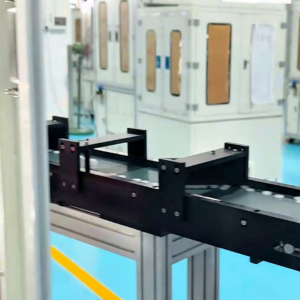
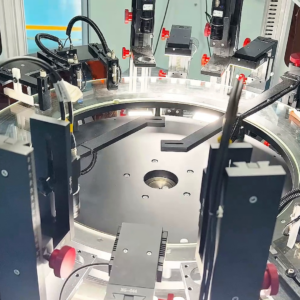
First, the dual vibratory disc feeding system organizes the sealing rings and moves them toward the inspection area. Next, the machine presents the components for image capture at different camera positions.
The demonstration features 8 industrial CCD cameras and two sets of camera-based detection systems. Together, these cameras capture multiple views of the sealing rings and provide image data for software evaluation.
In addition, the camera arrangement helps cover different inspection areas. However, manufacturers should select camera positions according to the actual ring geometry and the surfaces that require inspection. Sample testing can then confirm whether the selected views provide sufficient coverage.
What Defects Can the Vision System Inspect?
The demonstration identifies surface appearance defects and burrs as inspection targets. Before configuring the machine, manufacturers should define the specific defect categories and acceptance limits for their products.
For example, the engineering team can use accepted and defective samples to establish inspection criteria. This approach gives the team practical reference images and helps it evaluate the system against actual product conditions.
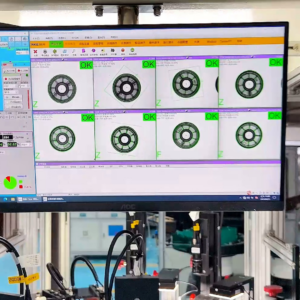
Meanwhile, the vision software displays multiple inspection images and result indicators. Manufacturers can compare these results with manually verified samples to check how consistently the system identifies conforming and nonconforming parts.
What Are the Demonstrated Speed and Accuracy?
The video specifies a detection speed of 2,000 pcs/min and a detection accuracy of ±0.01 mm for this application.
However, these figures describe the demonstrated setup. They do not guarantee the same performance for every sealing ring design, material, or inspection requirement.
Therefore, manufacturers should evaluate the system using their own components. The test should consider part dimensions, tolerances, surface finish, feeding stability, lighting conditions, and the defects that the machine must detect. In particular, the team should verify inspection reliability at the target production speed instead of evaluating speed and accuracy separately.
What Should You Prepare Before Choosing an Inspection Machine?
Before discussing an automated inspection solution, prepare the following information:
Which surfaces and features require inspection?
Which appearance defects or burr conditions should trigger rejection?
What critical dimensions and tolerances must the machine check?
What production speed does your line require?
How should the system handle NG parts and uncertain results?
With these details, the engineering team can assess the application more effectively. Furthermore, product drawings, representative samples, and a clear defect list can help determine a suitable camera layout and inspection process.
Discuss Your Battery Sealing Ring Inspection Requirements
Every sealing ring application has its own quality requirements. For this reason, manufacturers should evaluate the actual components and inspection criteria before selecting an automated solution.
RKE develops machine vision inspection and sorting solutions for industrial components. Share your product samples, drawings, target defects, and expected production output with our team. We can then discuss the application requirements and sample-testing process.