Screw inspection plays an important role in fastener manufacturing. Although screws are small components, defects in dimensions, threads, surface condition or shape can affect assembly performance and product reliability.
For high-volume production, automated visual inspection provides a consistent way to check screws and fasteners during the manufacturing process.
What Does Screw Inspection Check?
A screw inspection system can examine different features according to the product design and quality requirements.
Typical inspection points include:
- Thread appearance and condition
- Head shape and dimensions
- Overall length and diameter
- Product contour
- Burrs and scratches
- Missing or abnormal features
- Surface appearance
- Dimensional consistency
Different screw types may require different inspection criteria. The inspection process can therefore be configured according to the actual product and production requirements.
How Does Automated Screw Inspection Work?
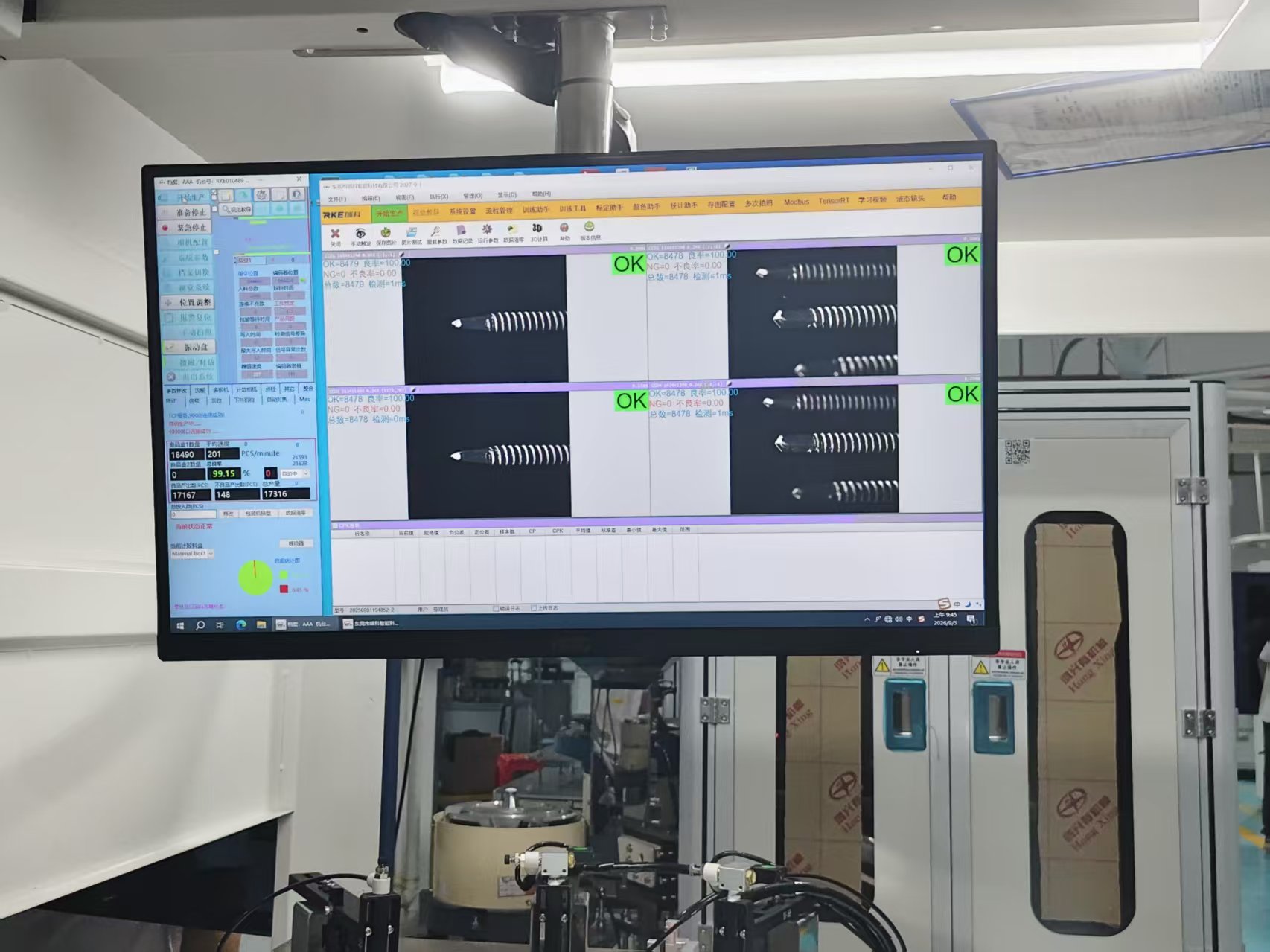
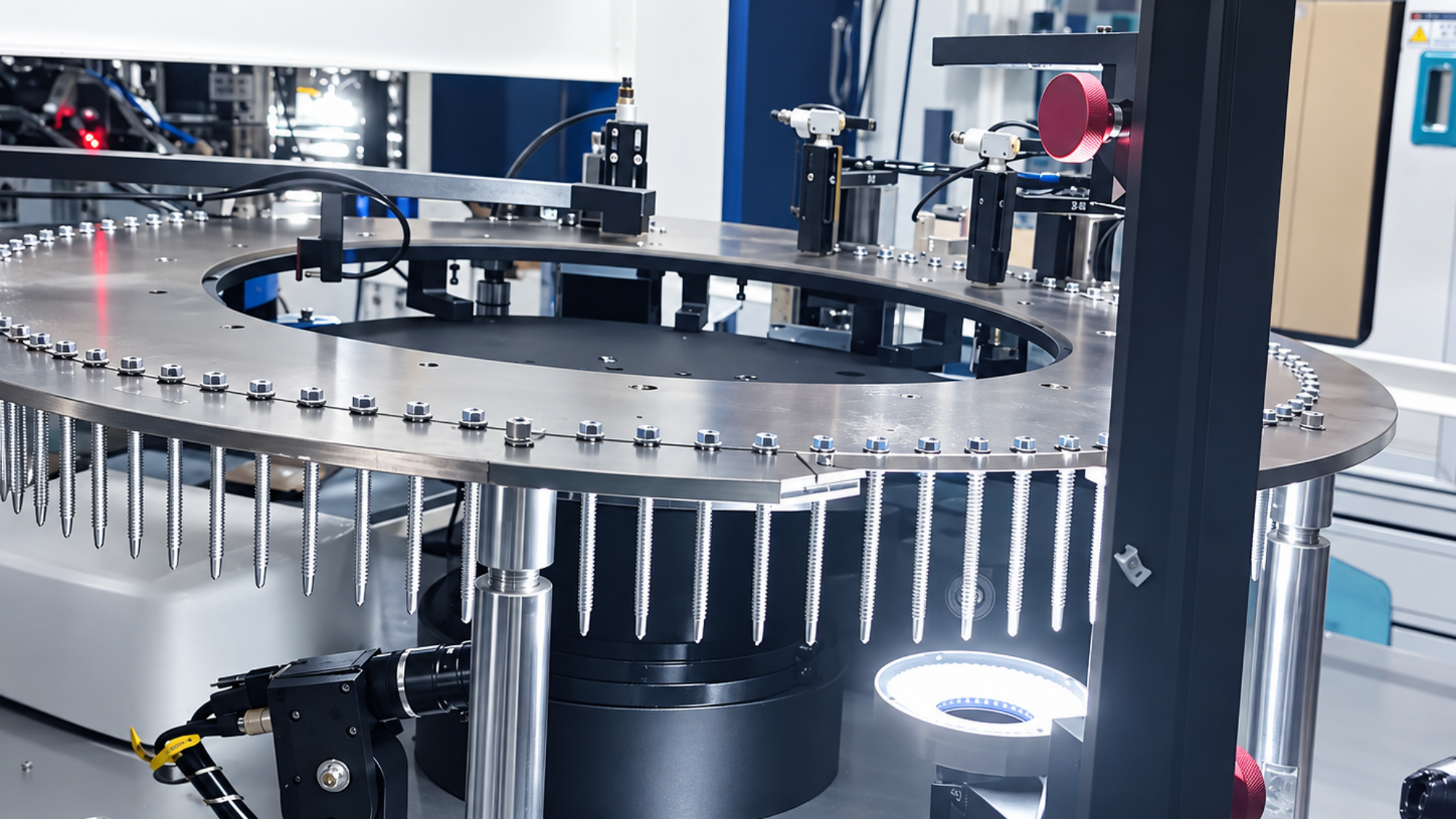
During automated screw inspection, screws are first fed and positioned for image acquisition. Industrial cameras and controlled lighting capture images of the products from the required inspection angles.
The vision system then analyzes the images based on predefined inspection criteria. Products that meet the requirements are identified as OK, while products with detected abnormalities are classified as NG.
This process allows manufacturers to inspect large quantities of fasteners using consistent inspection standards.
Why Is Visual Inspection Important for Fasteners?
Manual inspection can become challenging when production volumes are high or when products contain small and difficult-to-see features.
Automated visual inspection can help manufacturers:
- Maintain consistent inspection standards
- Reduce dependence on manual inspection
- Detect small appearance defects
- Check product dimensions and contours
- Separate abnormal products automatically
- Improve production quality control
For screw and fastener manufacturers, combining automated feeding, machine vision and automatic sorting can create a more efficient inspection process.
Applications in Fastener Manufacturing
Screw inspection can be applied to many types of fasteners, including screws, bolts, nuts, washers and other precision metal components.
The actual inspection items depend on the product structure, material, dimensions and required quality standards.
For more information about RKE visual inspection solutions, you can visit the [RKE official website] or explore the relevant visual inspection equipment on the website.
Conclusion
Screw inspection is becoming an important part of automated quality control in modern fastener manufacturing.
By combining machine vision, controlled lighting and automated sorting, manufacturers can establish a more consistent inspection process for appearance, dimensions, threads and other critical features.