Rubber rings are widely used in sealing, mechanical and industrial applications. Although these components are relatively small, their dimensions, surface condition and overall consistency can directly affect product performance.
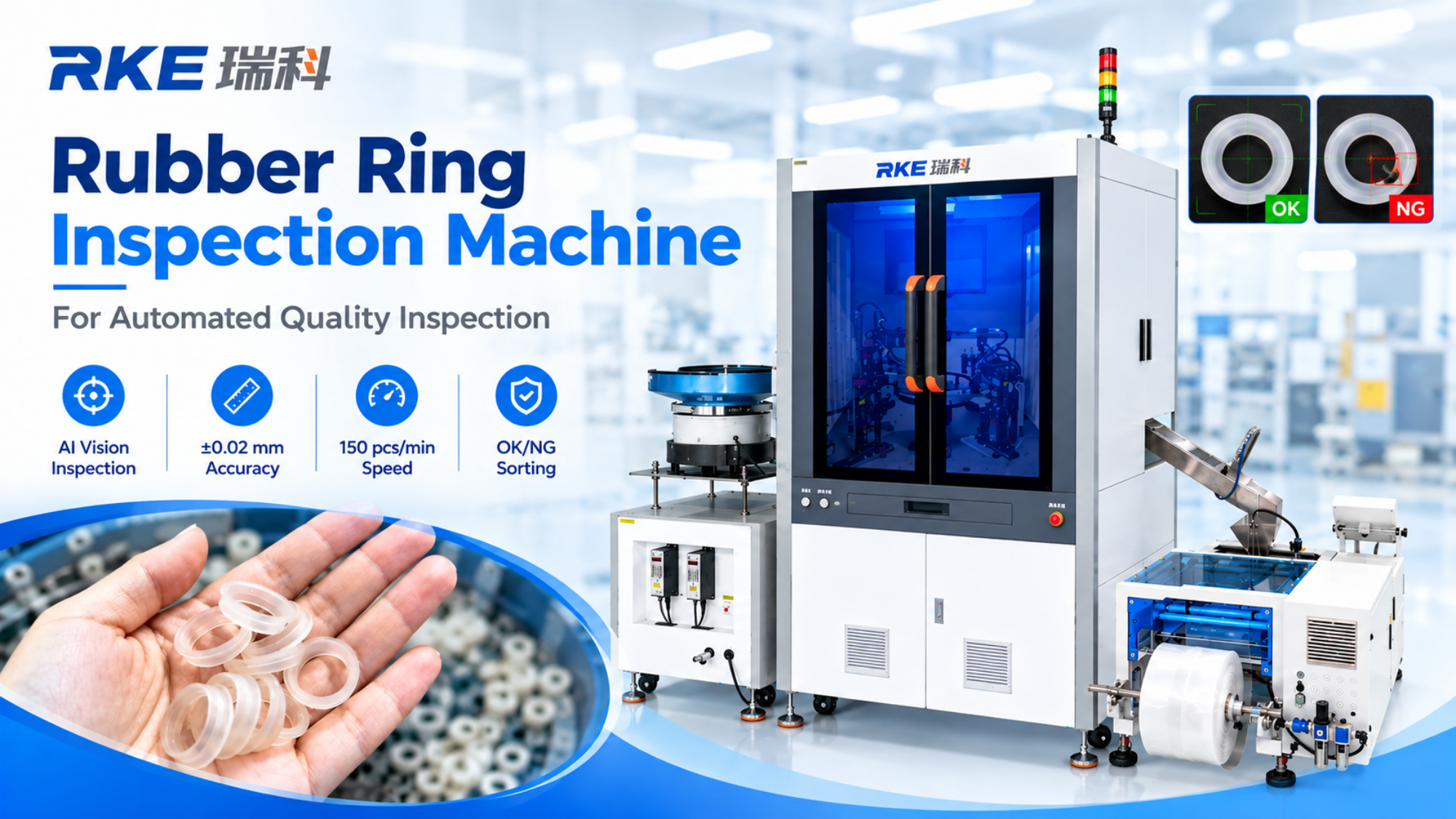
To maintain stable quality during mass production, manufacturers need a reliable inspection process that can check rubber rings continuously. In this real application, RKE uses an Rubber Ring Inspection Machine to automate feeding, visual inspection and quality classification. The system combines vibration feeding, machine vision and AI visual inspection to examine rubber rings during production.
The solution can help manufacturers reduce manual inspection work while maintaining a consistent quality inspection process.
Automated Feeding for Rubber Ring Inspection
The inspection process starts with a vibration disc feeding system. The vibration disc separates the rubber rings and guides them into the inspection area in a controlled flow. As the products move forward, the machine positions them for the following vision inspection steps.
This automated feeding method helps maintain a stable production flow. At the same time, it reduces manual handling and provides more consistent product positioning. For high-volume rubber ring production, stable feeding is an important part of the overall automated inspection system.
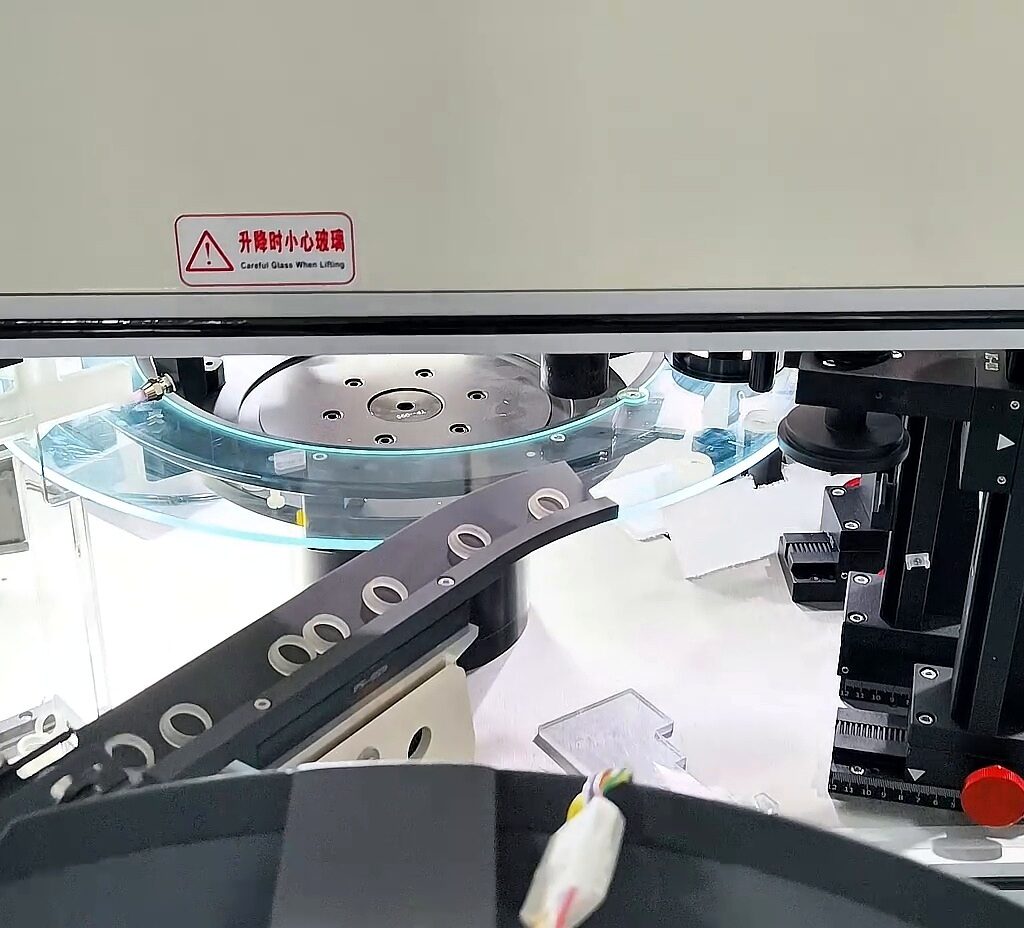
Vibration disc feeding system for automated rubber ring inspection
Multi-View Vision Inspection for Rubber Rings
After feeding, the rubber rings move into the inspection area, where multiple industrial cameras capture product images from different inspection positions. The machine vision inspection system analyzes the captured images and compares the detected features with predefined inspection requirements.
Depending on the customer’s quality standards, the system can inspect different characteristics of the rubber ring, including:
- Product dimensions
- Product profile
- Surface appearance
- Appearance defects
- Excess glue
- Other predefined quality requirements
As a result, manufacturers can inspect multiple quality points within one automated process instead of relying entirely on manual visual inspection.
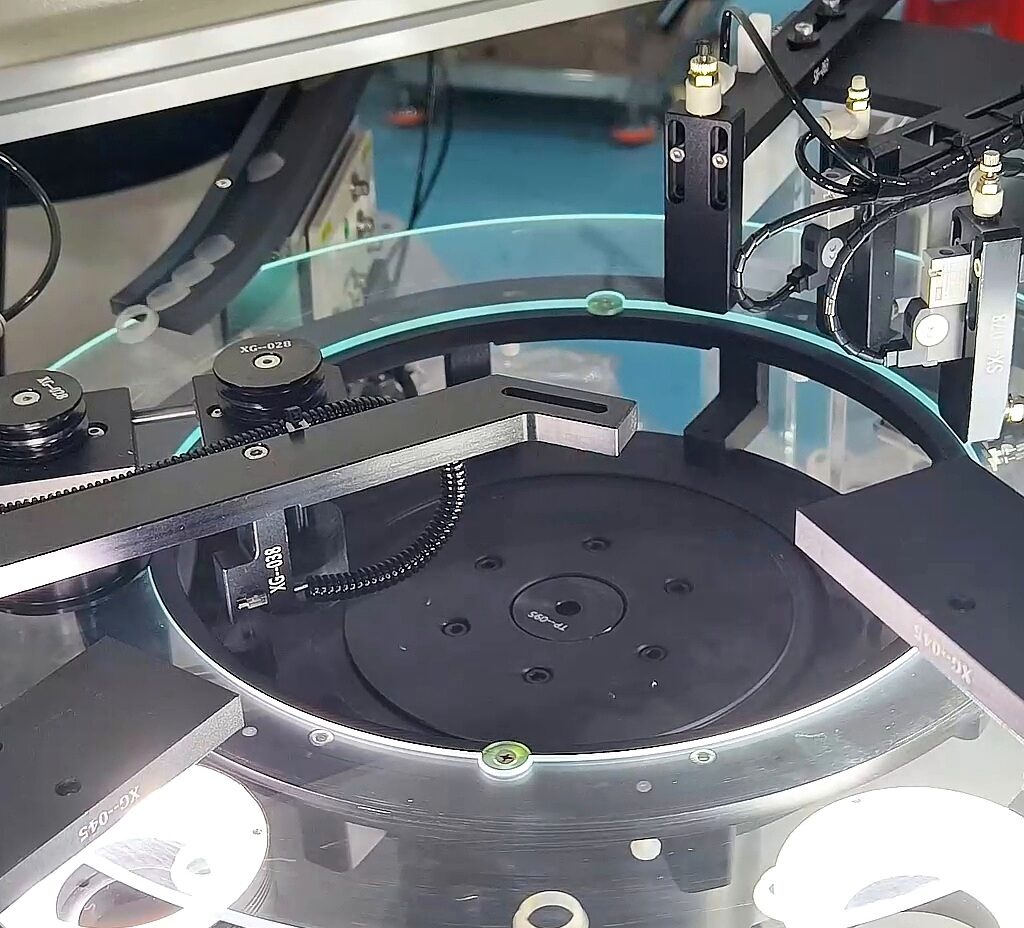
Multi-camera vision inspection area for rubber ring quality control
AI Visual Inspection for Surface Defects
Surface quality is an important inspection point for rubber rings. During production, visual defects or abnormal surface conditions may affect the appearance or application of the finished component. Therefore, the system uses AI visual inspection to analyze the surface of each product.
The inspection software can identify appearance abnormalities according to the customer’s inspection requirements. In this application, the system also checks for excess glue on the rubber ring. This type of defect can be difficult to check consistently when operators inspect products manually at high production volumes.
With automated image analysis, the system can apply the same inspection criteria throughout the production process.
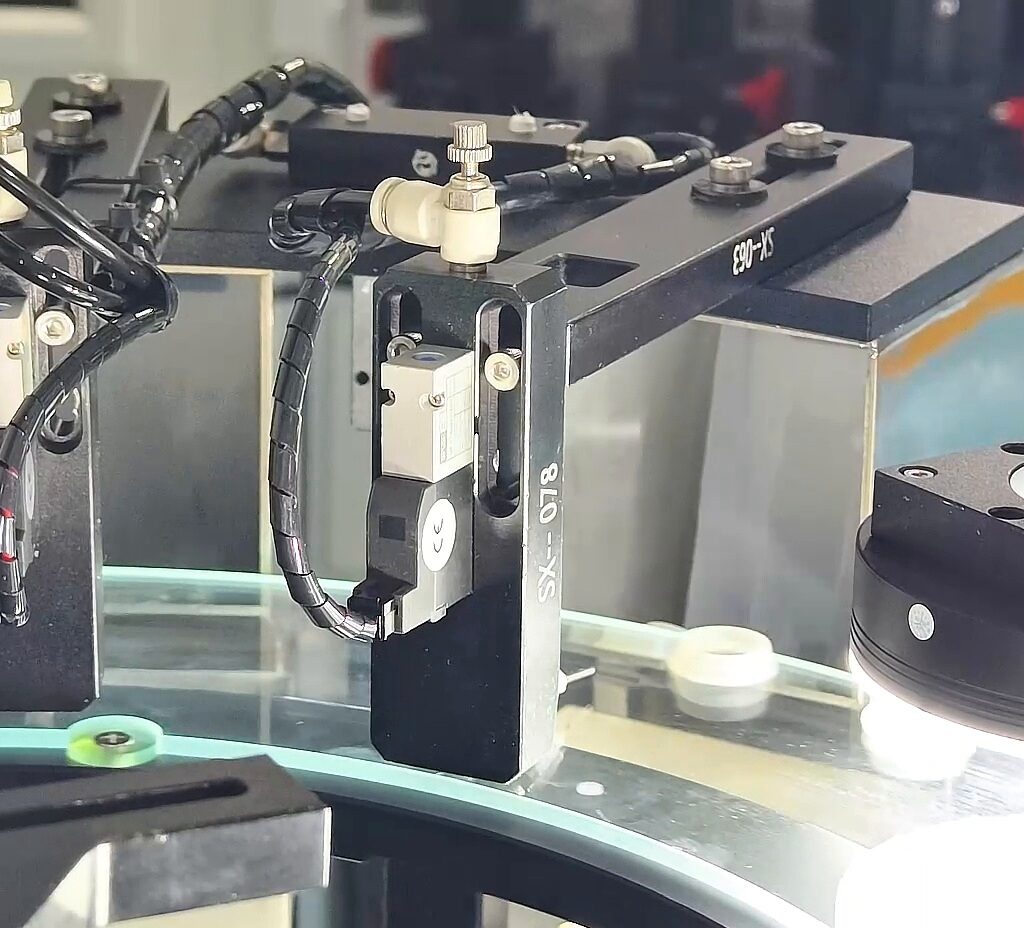
AI visual inspection of rubber ring surface defects
Excess Glue Detection
For rubber components, excess glue can be an important quality concern. In this application, the Rubber Ring Inspection Machine checks the product surface and identifies abnormal glue conditions.
The inspection system captures product images and analyzes the detected features in real time. When the system identifies a product that does not meet the predefined criteria, it marks the result as NG. This approach allows manufacturers to identify appearance problems more consistently and reduce dependence on manual inspection.
AI Inspection Software and OK/NG Classification
The inspection results are displayed through the machine’s AI inspection software. The software shows inspection images and quality results, allowing operators to monitor the inspection process more easily.
Qualified products receive an OK result, while products that fail the inspection criteria receive an NG result. This real-time classification helps production teams understand inspection results and separate defective products from qualified products.
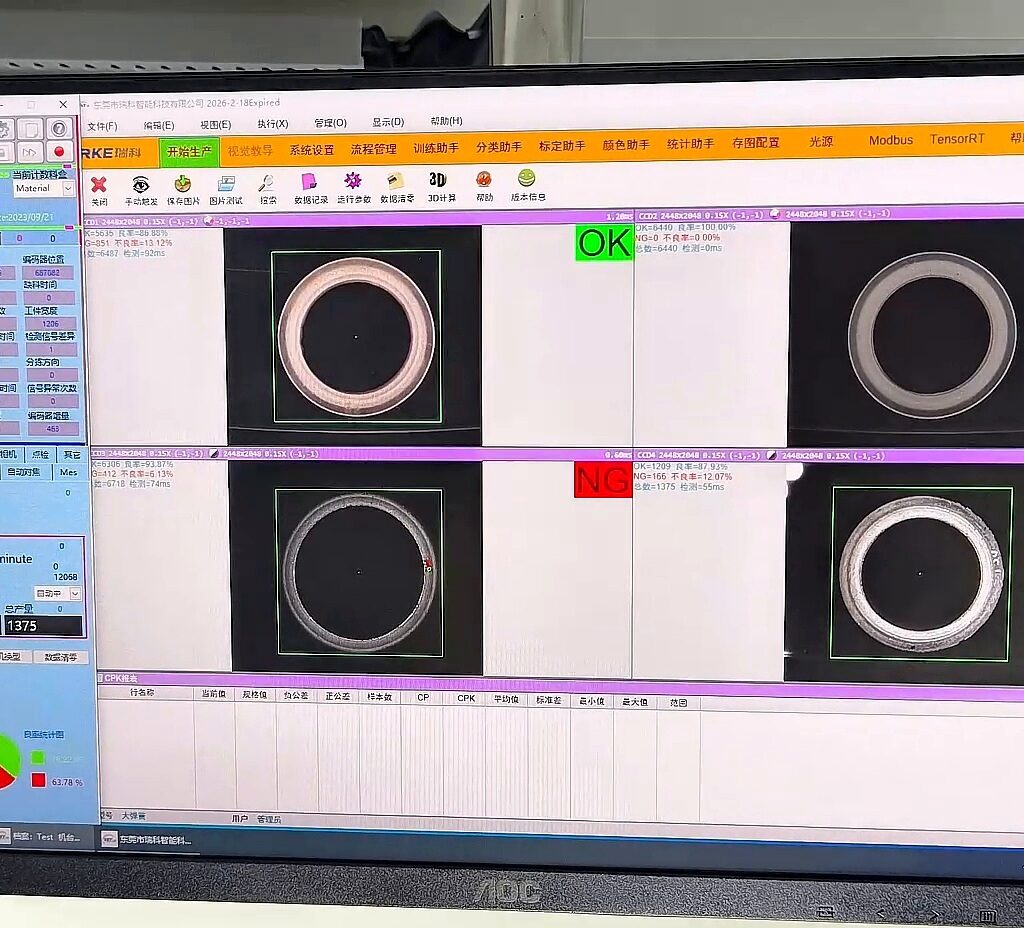
AI inspection software showing OK and NG rubber ring results
150 pcs/min Inspection Speed
According to the demonstrated application in the video, the Rubber Ring Inspection Machine reaches an inspection speed of 150 pcs/min. The actual inspection speed can vary depending on the rubber ring’s size, shape, material, defect requirements and machine configuration.
For this application, the system also demonstrates an inspection accuracy of ±0.02 mm. These parameters provide a practical reference for manufacturers evaluating automated rubber ring inspection for continuous production.
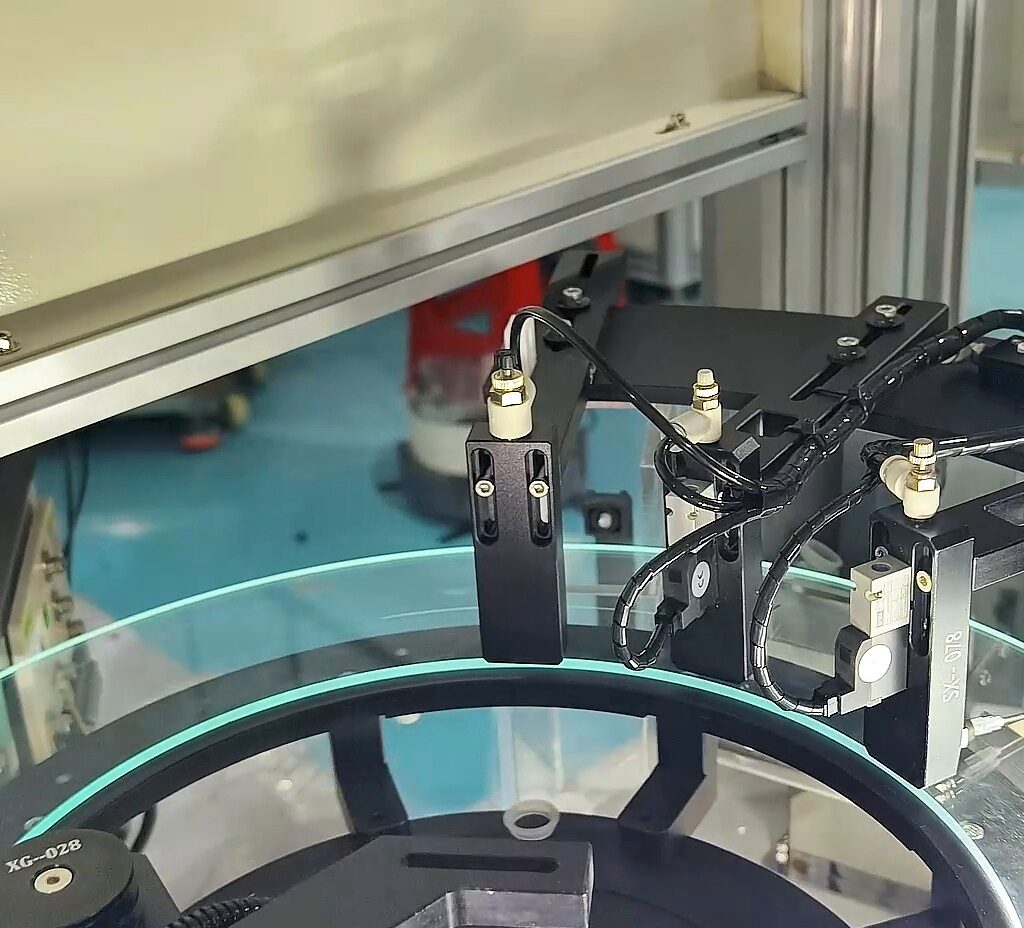
Automated rubber ring inspection system in production
A Practical Automated Rubber Ring Inspection Solution
Manual inspection can become difficult to maintain when production volumes increase. Operators need to inspect products repeatedly, while different inspection conditions may also affect inspection consistency.
An automated Rubber Ring Inspection Machine provides a more controlled approach by integrating feeding, positioning, machine vision, AI analysis and quality classification into one inspection process.
In this application, RKE combines machine vision inspection, AI visual inspection and automated quality classification to inspect rubber rings for dimensional and appearance requirements. The demonstrated application reaches 150 pcs/min inspection speed with ±0.02 mm inspection accuracy.
Overall, automated rubber ring inspection can help manufacturers improve inspection consistency, reduce manual workload and establish a more stable quality control process for rubber components.
Why Choose Automated Rubber Ring Inspection?
- Consistent inspection of each product
- Automated feeding and positioning
- Multi-angle visual inspection
- Dimensional and appearance inspection
- AI-based defect detection
- Real-time inspection results
- Automated OK/NG classification
- Reduced manual inspection workload
For manufacturers producing rubber rings and other sealing components, machine vision provides a practical way to integrate quality inspection into the production process.