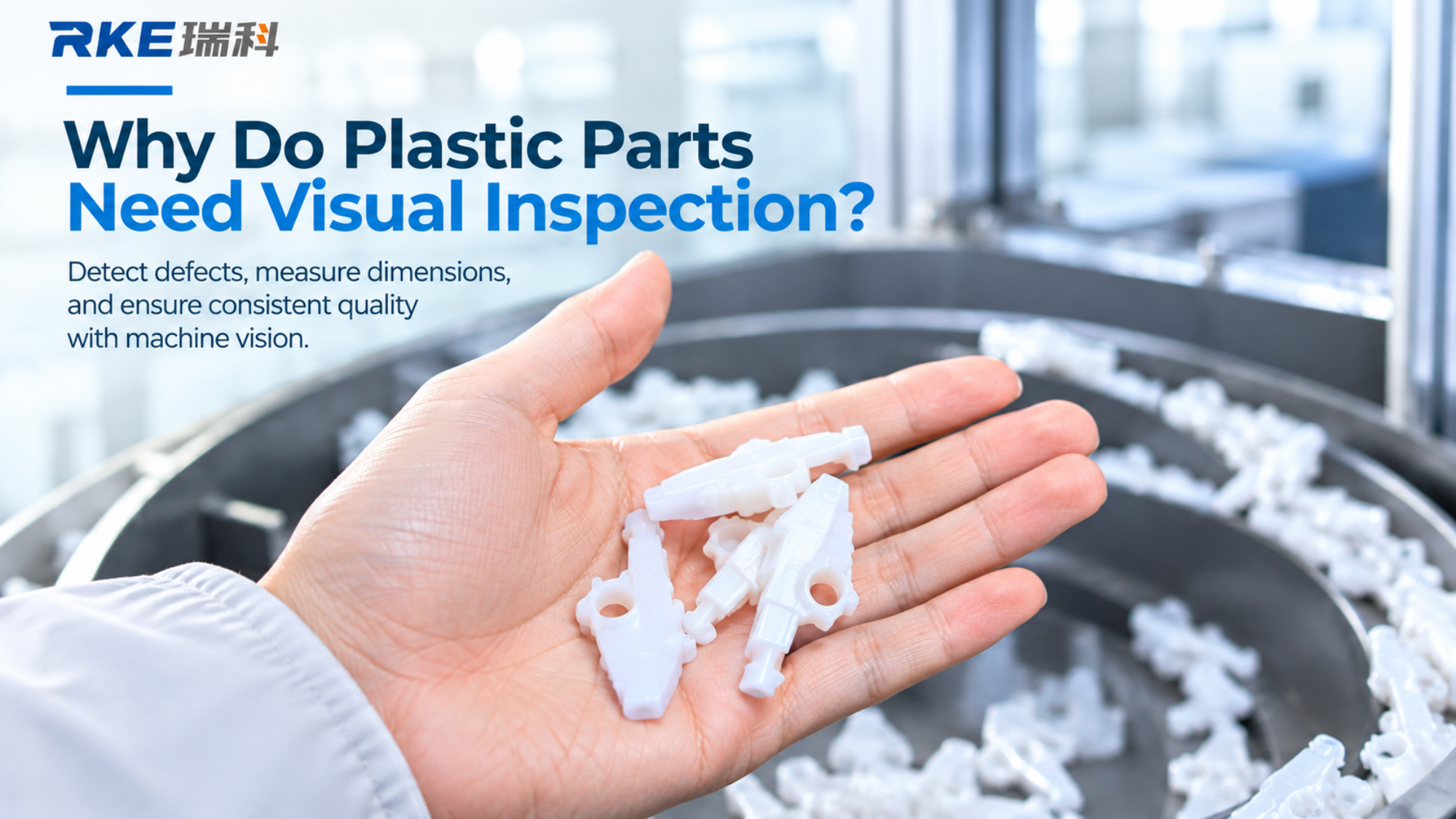
Plastic precision parts are often small and complex, with critical requirements for dimensions, shape and surface appearance. Even a small defect can affect assembly, function or the consistency of the final product.
As production volumes increase, manual inspection can become difficult to maintain. Operators need to inspect large quantities of components while maintaining the same quality standard throughout the production process.
For this reason, Plastic Parts Vision Inspection provides an effective solution for automated quality control.
In this application, RKE uses machine vision technology to automatically feed, position and inspect plastic components, helping manufacturers achieve a more consistent inspection process.
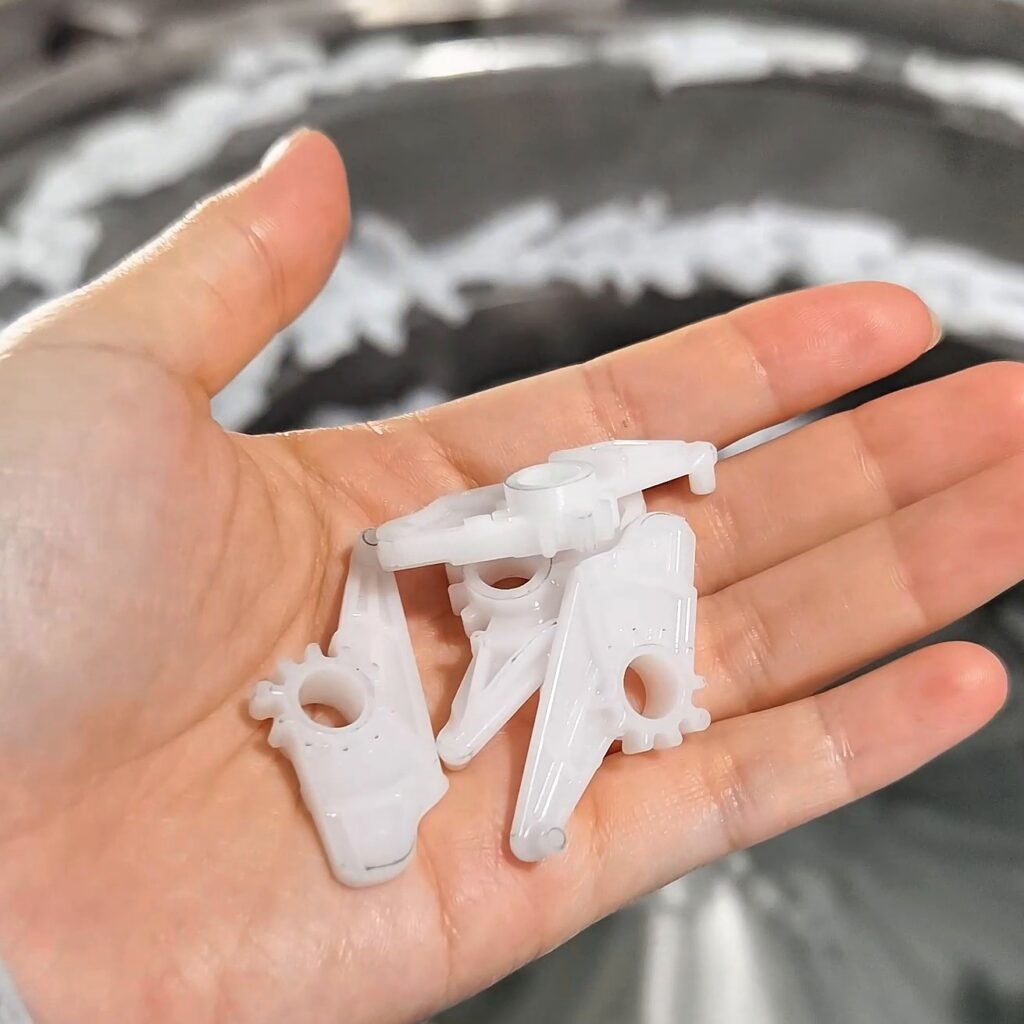
Plastic precision parts used in an automated vision inspection application
Automated Feeding for Continuous Inspection
The inspection process starts with a vibration disc feeding system.
Plastic components are automatically separated and transferred from the feeding system to the inspection area. This creates a continuous and stable material flow while reducing manual handling.
After feeding, the components are accurately positioned on a glass inspection platform before entering the camera inspection area.
Stable feeding and positioning are particularly important for Machine Vision Inspection because consistent product positioning helps cameras capture clearer and more eatable clearer and more.
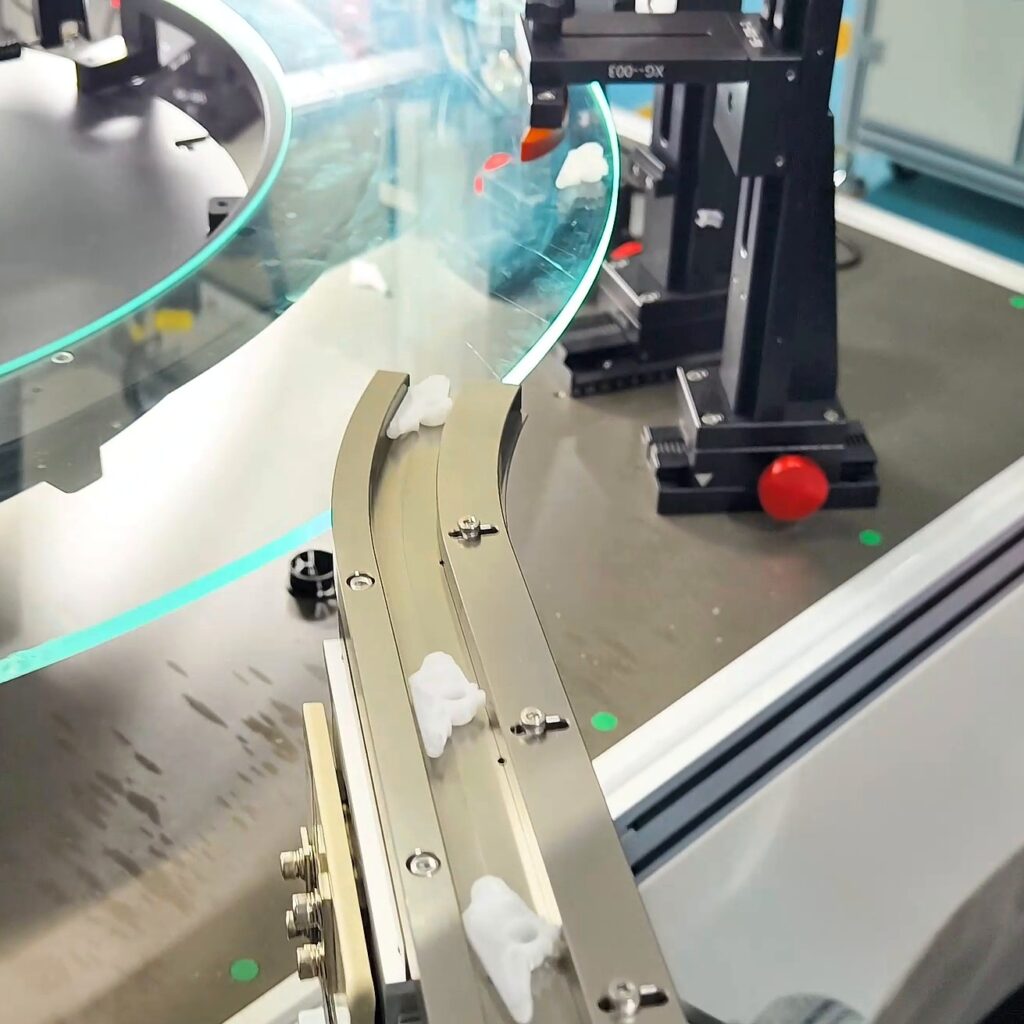
Vibration disc feeding for automated plastic parts inspection
Six CCD Cameras for Multi-View Inspection
Different areas of a plastic component may require different inspection angles.
In this application, the system is equipped with six CCD industrial cameras. The cameras capture different views of the product while it moves through the inspection process.
the inspect several product features within one production cycle.
Typical inspection points can include product dimensions, product contour, shape and profile, surface appearance, missing or abnormal features, deformation and surface appearance, missing or abnormal features, deformation and def.
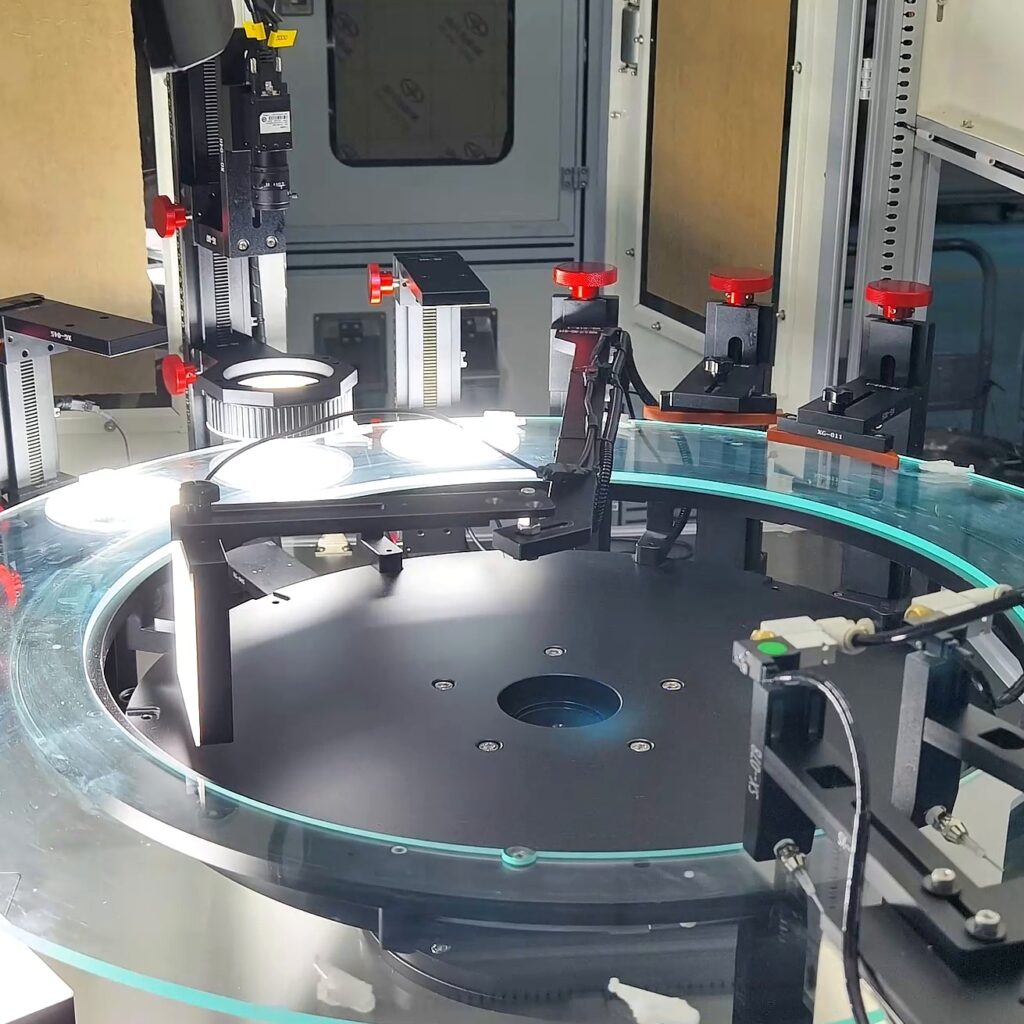
Six CCD industrial cameras for multi-view plastic parts inspection
Surface Defect Detection with Machine Vision
The appearance of plastic components can directly affect assembly quality and product consistency.
During injection molding and subsequent handling, plastic parts may develop defects such as deformation, abnormal edges, surface marks or other appearance abnormalities.
A Plastic Parts Vision Inspection System captures images of each component under controlled lighting conditions. The inspection software then analyzes the captured images according to predefined inspection criteria.
This allows the system to identify abnormal products automatically instead of relying entirely on manual visual inspection.
Dimensional and Contour Inspection
In addition to appearance, dimensional consistency is an important requirement for precision plastic parts.
A Vision Inspection Machine can measure selected dimensions and analyze the contour of the product.
Depending on the product structure, inspection requirements may include length, width, hole diameter, profile, edge position and other critical features.
In this application, the demonstrated inspection accuracy is ±0.02 mm.
The actual achievable accuracy can vary depending on product material, size, geometry, lighting conditions and inspection requirements.
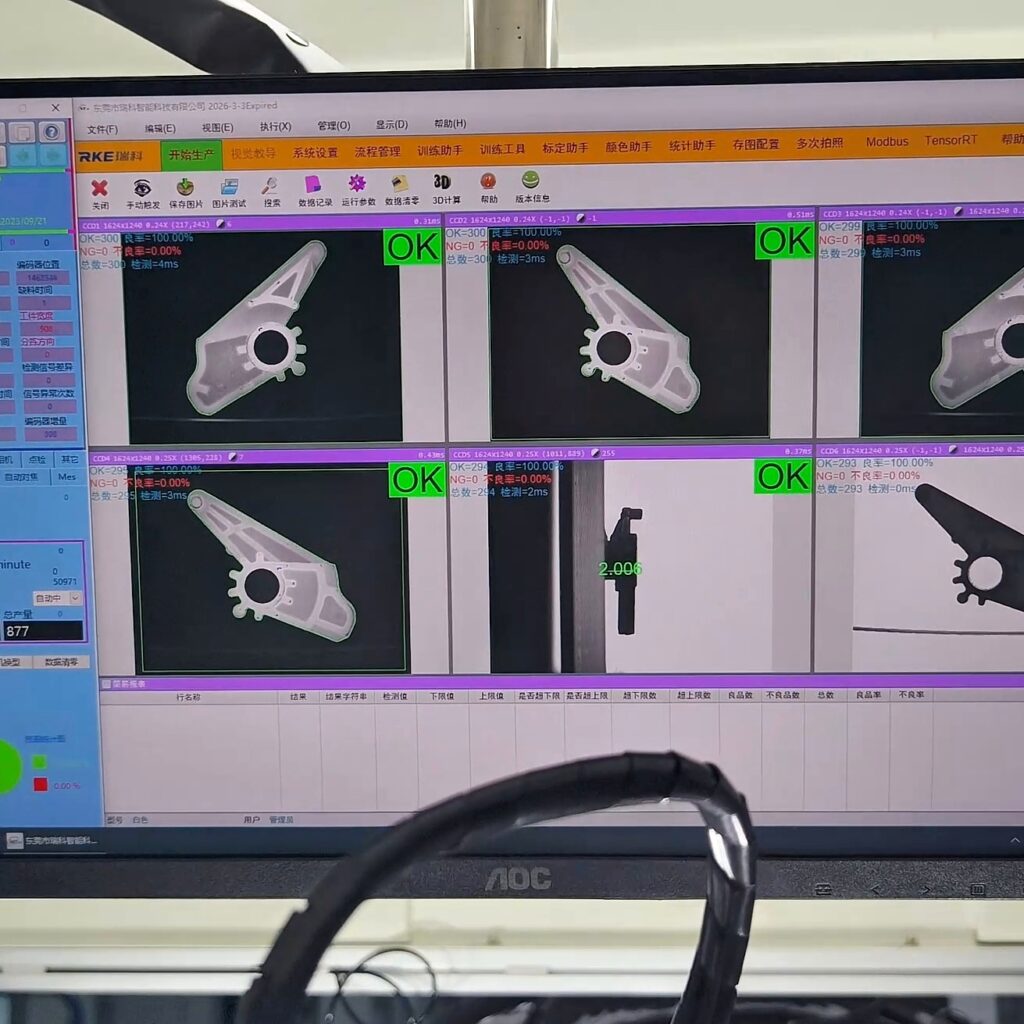
Machine vision software showing inspection results for plastic parts
Automated OK and NG Classification
After image capture and analysis, the system evaluates each product according to the configured inspection criteria.
Qualified products are identified as OK, while products with detected abnormalities are classified as NG.
This creates a clear automated inspection process:
Feeding → Positioning → Image Capture → Vision Analysis → OK/NG Classification → Sorting
Instead of manually checking every component, operators can monitor the automated inspection process while the system performs repetitive visual checks continuously.
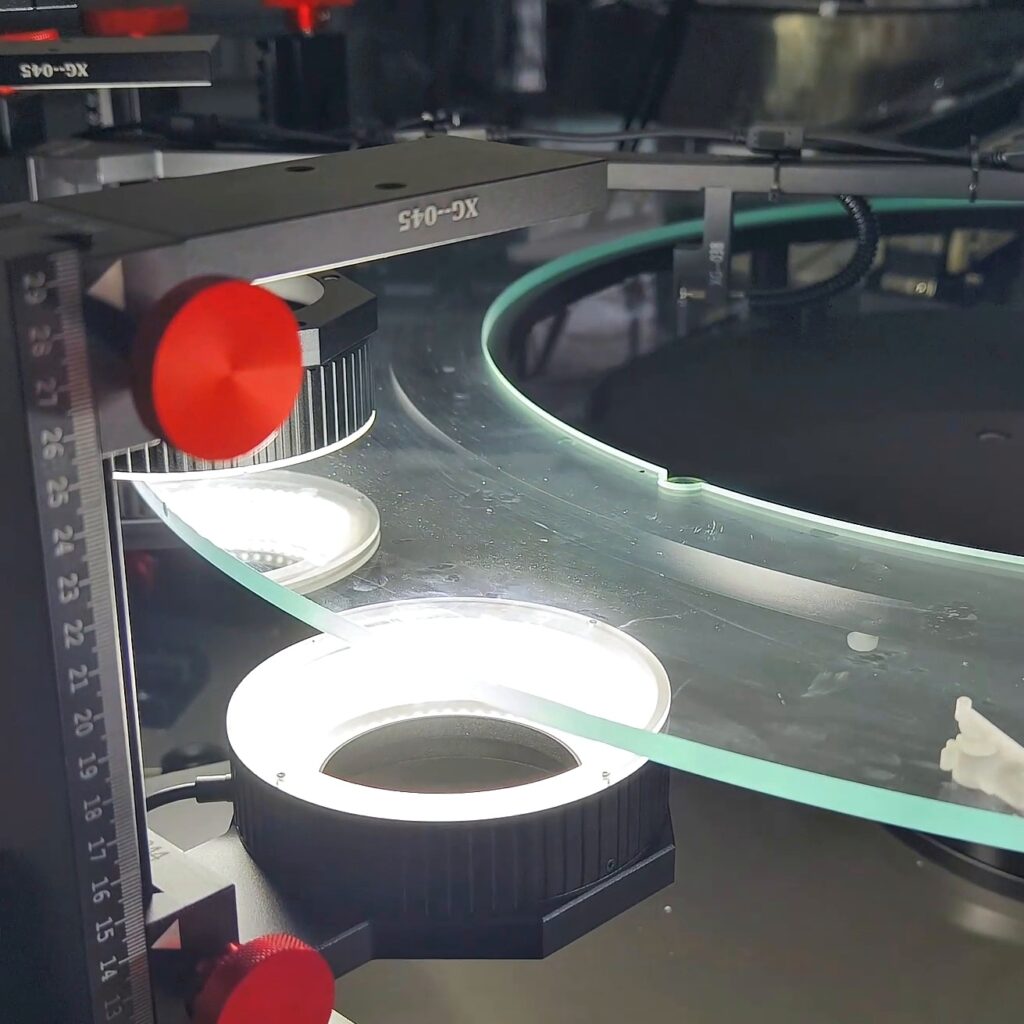
Automated plastic parts inspection and quality classification
60 Pieces per Minute for Continuous Production
The video demonstrates an inspection speed of 60 pcs/min for this plastic component application.
The actual production speed of a Plastic Parts Inspection Machine depends on factors such as product dimensions, feeding stability, number of inspection points, camera configuration and required inspection accuracy.
For manufacturers producing precision plastic components in batches, automated inspection can provide a repeatable method for checking products throughout production.
Why Automate Plastic Parts Inspection?
Plastic components may appear simple, but small dimensional deviations or appearance defects can create problems during assembly.
Manual inspection can also become challenging when production quantities inspection. Fatigue, 片. efficiency.
With AI Vision Inspection and industrial camera technology, manufacturers can establish a more standardized inspection process.
Automated inspection can help reduce repetitive manual inspection work, improve inspection consistency, detect predefined appearance defects, check dimensional and contour requirements, classify OK and NG products automatically, and support continuous production quality control.
A Practical Plastic Parts Vision Inspection Solution
Every plastic component has its own geometry, material characteristics and quality requirements. Therefore, an effective Plastic Parts Vision Inspection solution should be designed around the actual product.
Depending on the application, the system can integrate vibration feeding, glass-platform positioning, CCD industrial cameras, customized lighting, dimensional measurement, surface inspection and automated OK/NG classification.
For this application, the demonstrated inspection speed is 60 pcs/min, with a demonstrated inspection accuracy of ±0.02 mm.
Overall, automated Plastic Parts Vision Inspection provides manufacturers with a practical way to improve inspection consistency, reduce manual workload and maintain stable quality control during production.