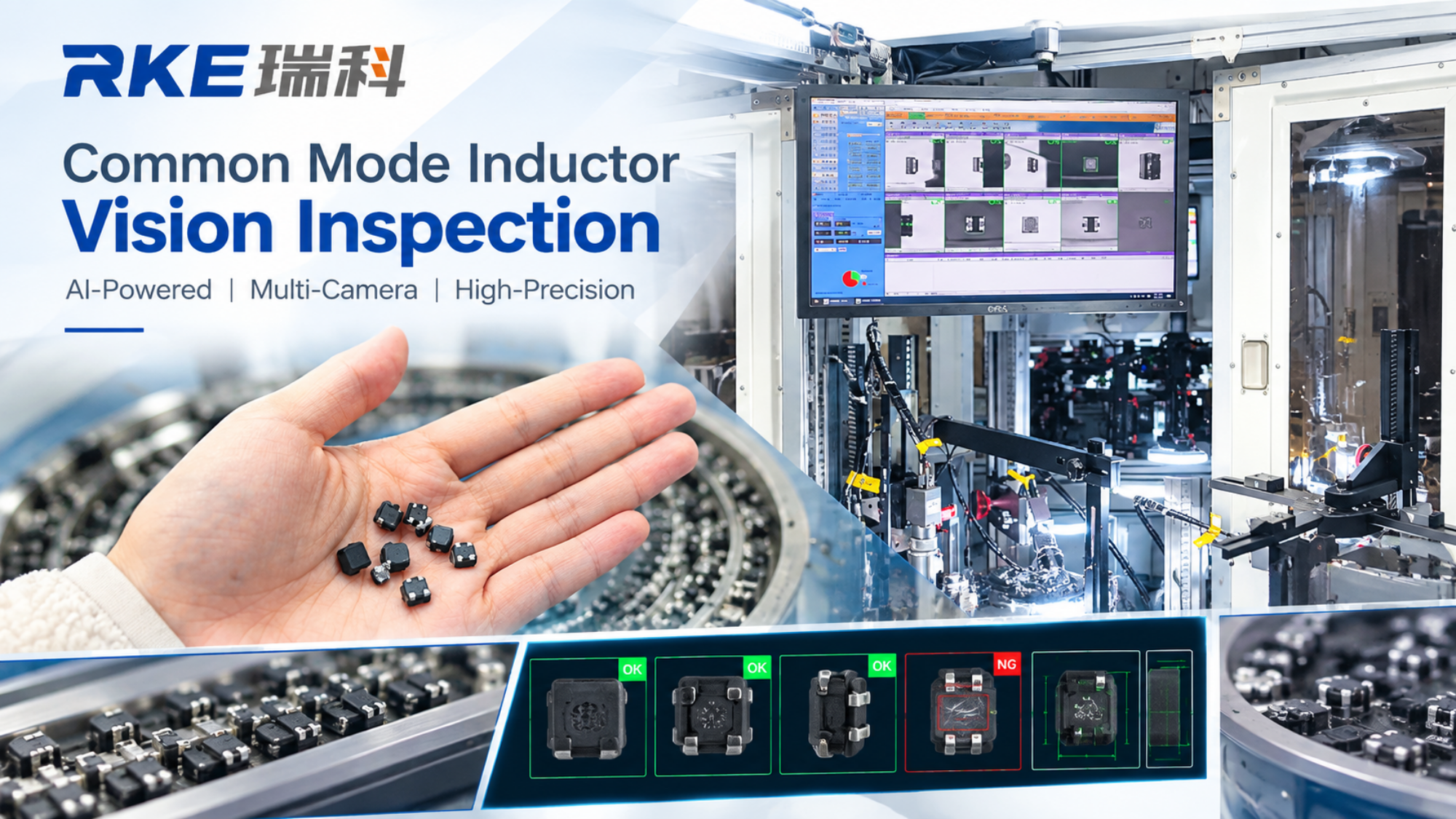
Why Common Mode Inductors Need Automated Vision Inspection
Common mode inductors are small electronic components that require consistent quality during production. Their compact size and fine features can make manual inspection difficult, especially when manufacturers processarge quities
A Common Mode Inductor Inspection Machine provides a repeatable way to inspect each component with industrial cameras and controlled lighting. Instead of checking parts one by one, the system captures multiple product views and com
In this RKE application, the inspection system combines 9 CCD industrial cameras, AI vision inspection software and automated screening. The setup is designed to check key appearance and dimensional characteristics while maintaining continu.
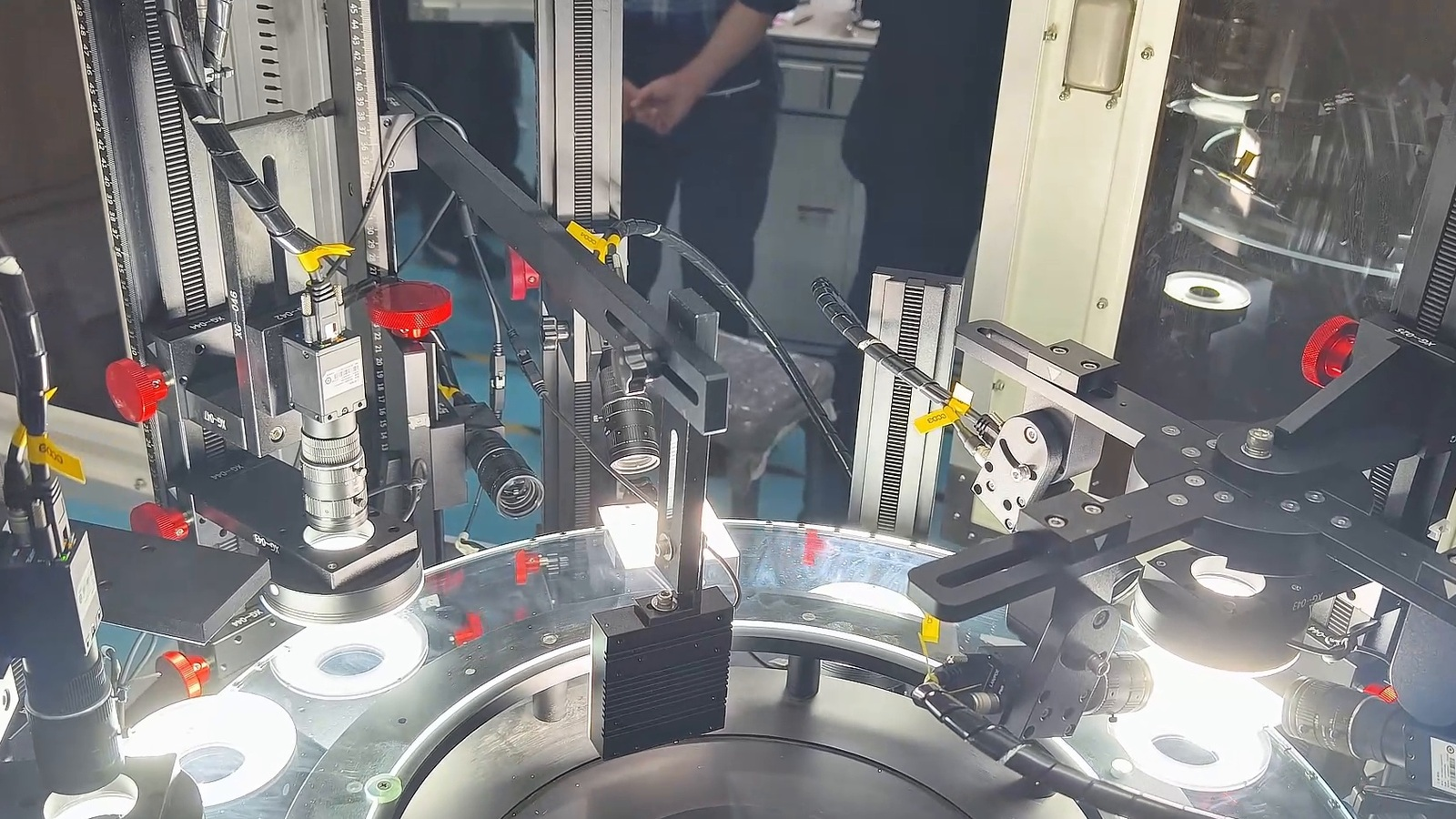
9 CCD Industrial Cameras for Multi-View Inspection
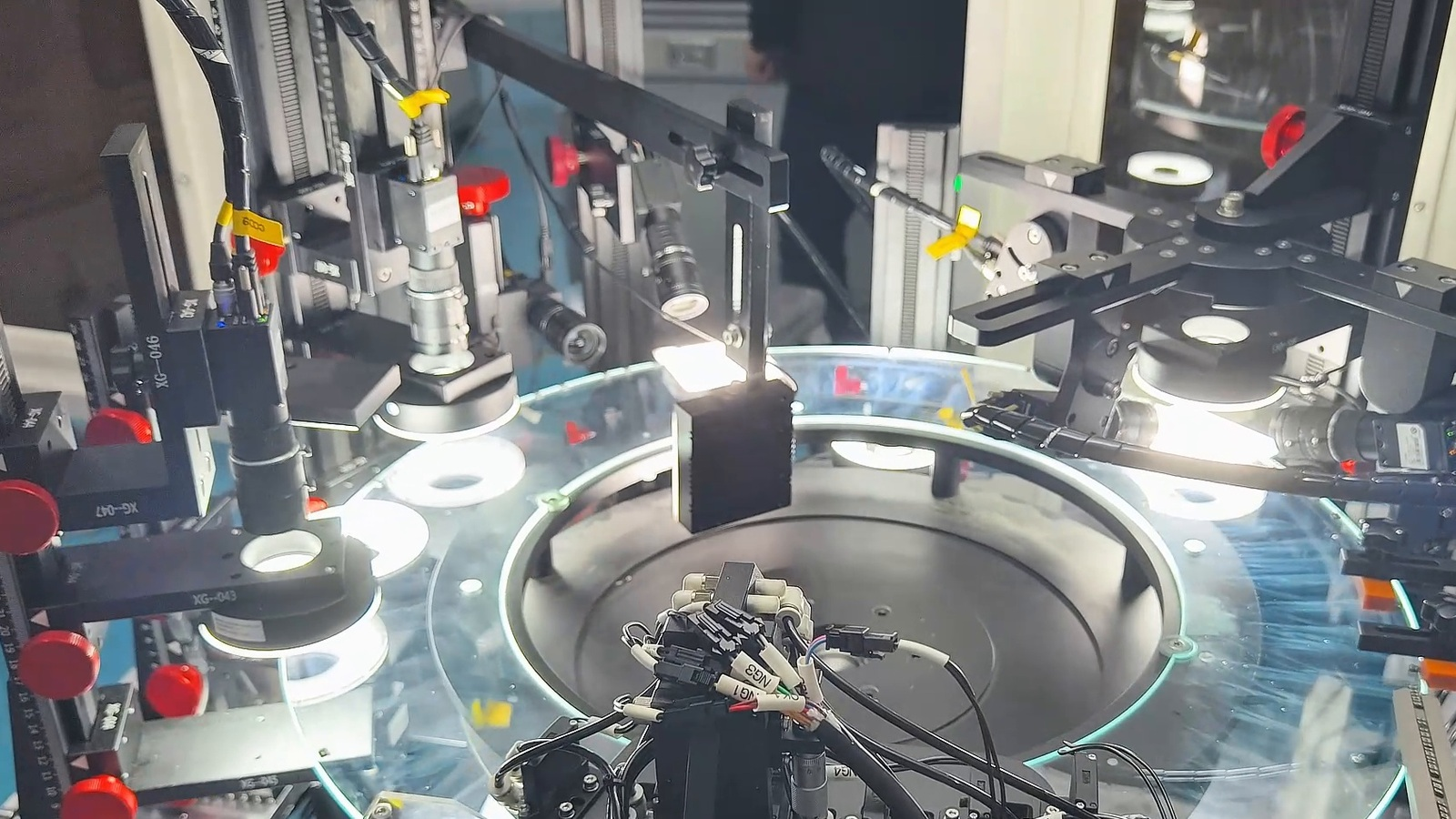
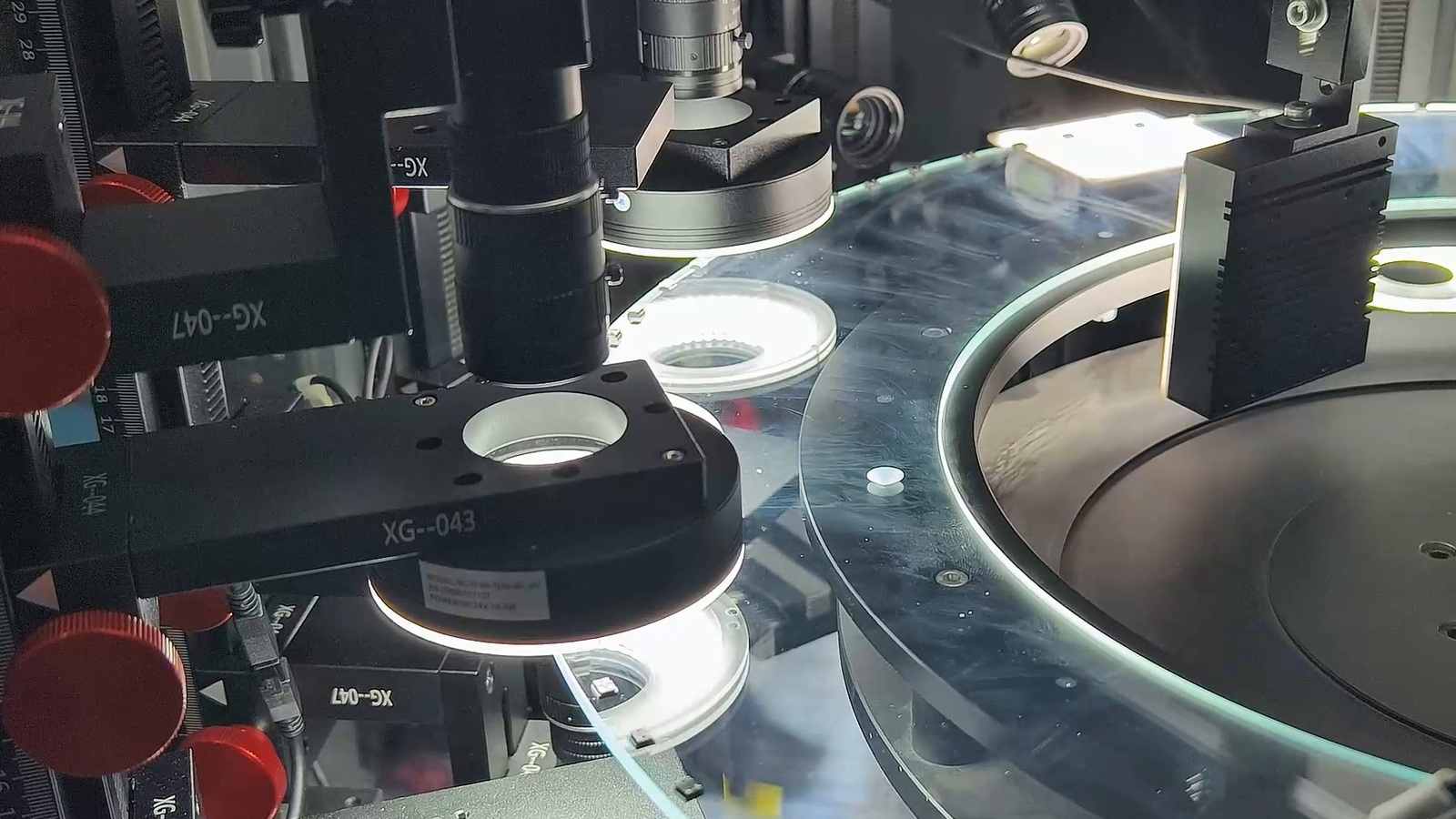
The inspection area uses 9 CCD industrial cameras positioned around the product path. Each camera captures a different view of the common mode inductor.
This multi-camera arrangement gives the system more visual information than a single viewing angle. Therefore, it can inspect different surfaces and product features during the same inspection cycle.
Camera position, lens selection and lighting can be adjusted according to the component and the required inspection criteria. This flexibility is useful when manufacturers need to inspect small electronic parts with dinentone sha small electronic parts with dorifferent sha small electronic parts with dorifferent sha small electronic parts with dorifferent sha small electron.
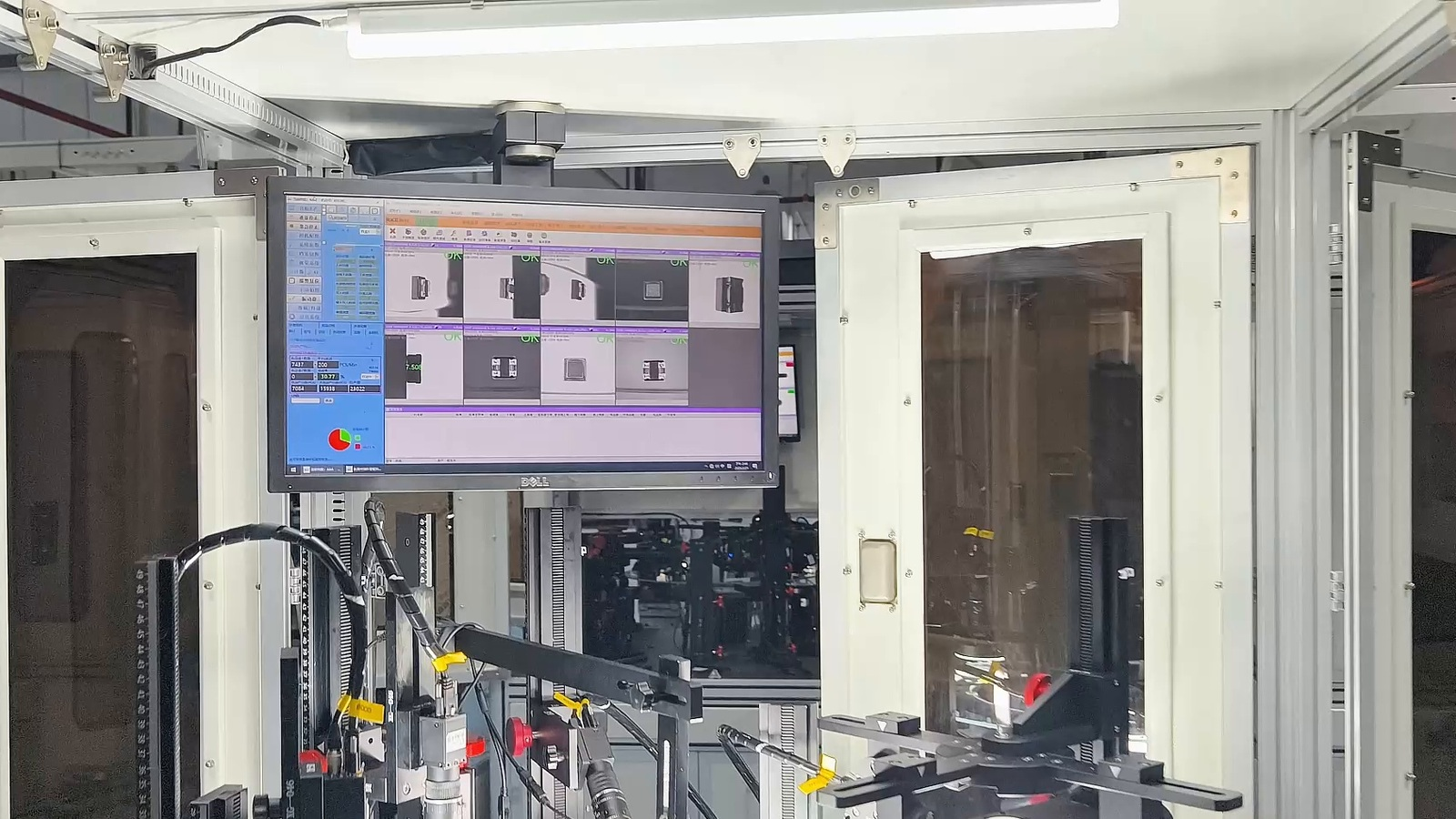
AI Vision Inspection for Appearance Defects
Appearance quality is an important part of electronic component inspection. The vision system can compare captured images with predefined criteria and identify visible abnormalities.
Depending on the application, inspection items can include surface appearance, abnormal areas, missing features and other predefined defects. The actual inspection range depends on the product and the customer’s quality requirements.
In addition, controlled lighting helps create stable image conditions. As a result, the software can analyze product images more consistently during continuous production.
Dimensional and Height Inspection
Machine vision can also support dimensional inspection for selected product features. In this application, the system checks product dimensions and height according to configured inspection parameters.
The cameras capture each component at defined inspection positions. The software then evaluates the image against the required criteria and produces an inspection result.
This approach helps manufacturers monitor dimensional consistency without relying entirely on manual measurement. It can also provide inspection data for production monitoring and quality analysis.
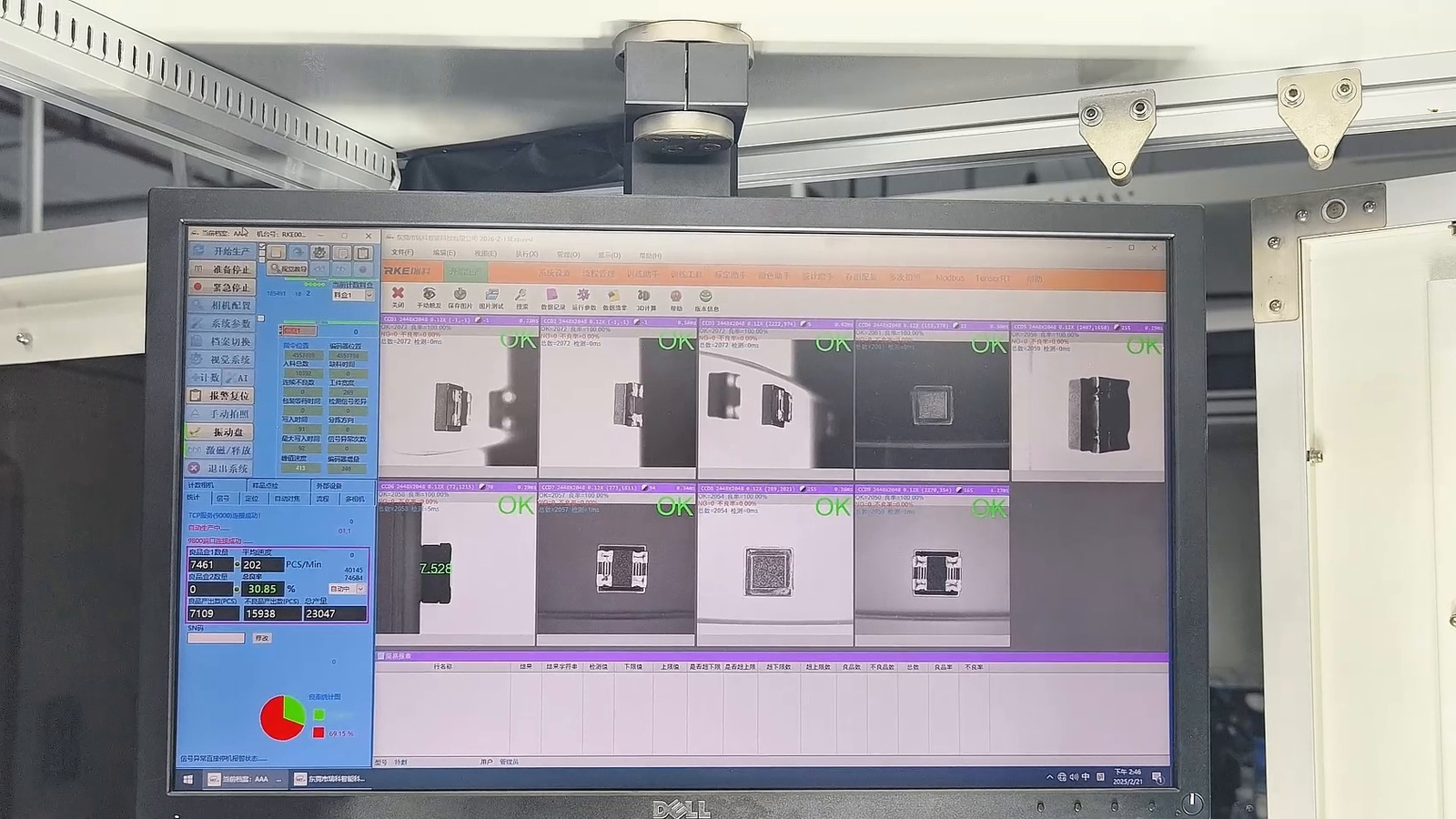
Automated OK and NG Screening
After image analysis, the system classifies each product according to the configured inspection rules. Qualified products receive an OK result, while products that fail a criterion receive an NG result.
The inspection process can connect with an automatic sorting mechanism. Therefore, the system can separate qualified and defective components during continuous production.
Automated classification reduces repetitive manual checking and helps maintain a consistent inspection process across high-volume production.
Up to 150 pcs/min for Continuous Production
Production speed is another important consideration for electronic component inspection. In the video demonstration, the system reaches a reported screening speed of up to 150 pcs/min.
The actual production speed can vary according to component dimensions, feeding stability, inspection requirements, camera configuration and sorting conditions. Therefore, manufacturers should evaluate the complete application before defining the final cycle time.
By combining automated feeding, multi-camera inspection, AI image analysis and sorting, the system provides a continuous workflow for common mode inductor quality inspection.
A Practical Common Mode Inductor Inspection Solution
There is no single vision configuration that fits every electronic component. Product size, material, surface finish, defect definition and production speed all influence the required cameras, optics, lighting and production speed all influence the required cameras, optics, lighting and software settings.
RKE develops customized Machine Vision Inspection solutions for electronic components, hardware, fasteners, automotive parts and other precision products. For common mode inductors, the inspection workflow can combine. classification.
The goal is straightforward: inspect each component consistently, identify predefined quality issues and support stable quality control throughout production.
Frequently Asked Questions
What is a Common Mode Inductor Inspection Machine?
It is an automated vision inspection system designed to check common mode inductors using industrial cameras, controlled lighting and image-processing software.
What can the system inspect?
Depending on the application, the system can inspect appearance, selected dimensions, height, missing features and other predefined visual characteristics.
Why use multiple CCD cameras?
Multiple cameras provide different viewing angles. This gives the inspection system more visual information and can improve coverage of small components.
Can the machine sort defective products automatically?
Yes. When the inspection system connects with a sorting mechanism, it can classify products as OK or NG and separate them automatically.
Is 150 pcs/min guaranteed for every product?
No. The 150 pcs/min figure is the reported speed shown in this application demonstration. Actual speed depends on product characteristics, feeding, inspection requirements and system configuration.