AI Vision Inspection for MPO Fiber Optic Adapters: A Real Production Application
Optical components leave little room for visual inconsistency. For an MPO fiber optic adapter, even a small assembly abnormality or surface defect can affect product acceptance on the production line.
Recently, RKE demonstrated an automated vision inspection application for MPO fiber optic adapters. The system combines flexible feeding, multi-camera imaging and AI-based inspection to check different product features during continuous production.
Automated Feeding Creates a Stable Inspection Process
The inspection process starts with a flexible vibratory bowl feeder.
First, a large batch of MPO fiber optic adapters enters the feeder. The system then separates the parts and guides them toward the inspection area.
Stable feeding plays an important role in machine vision inspection. When each adapter reaches the inspection position in a consistent way, the cameras can capture more repeatable images. As a result, the vision software can analyze each product under similar conditions.
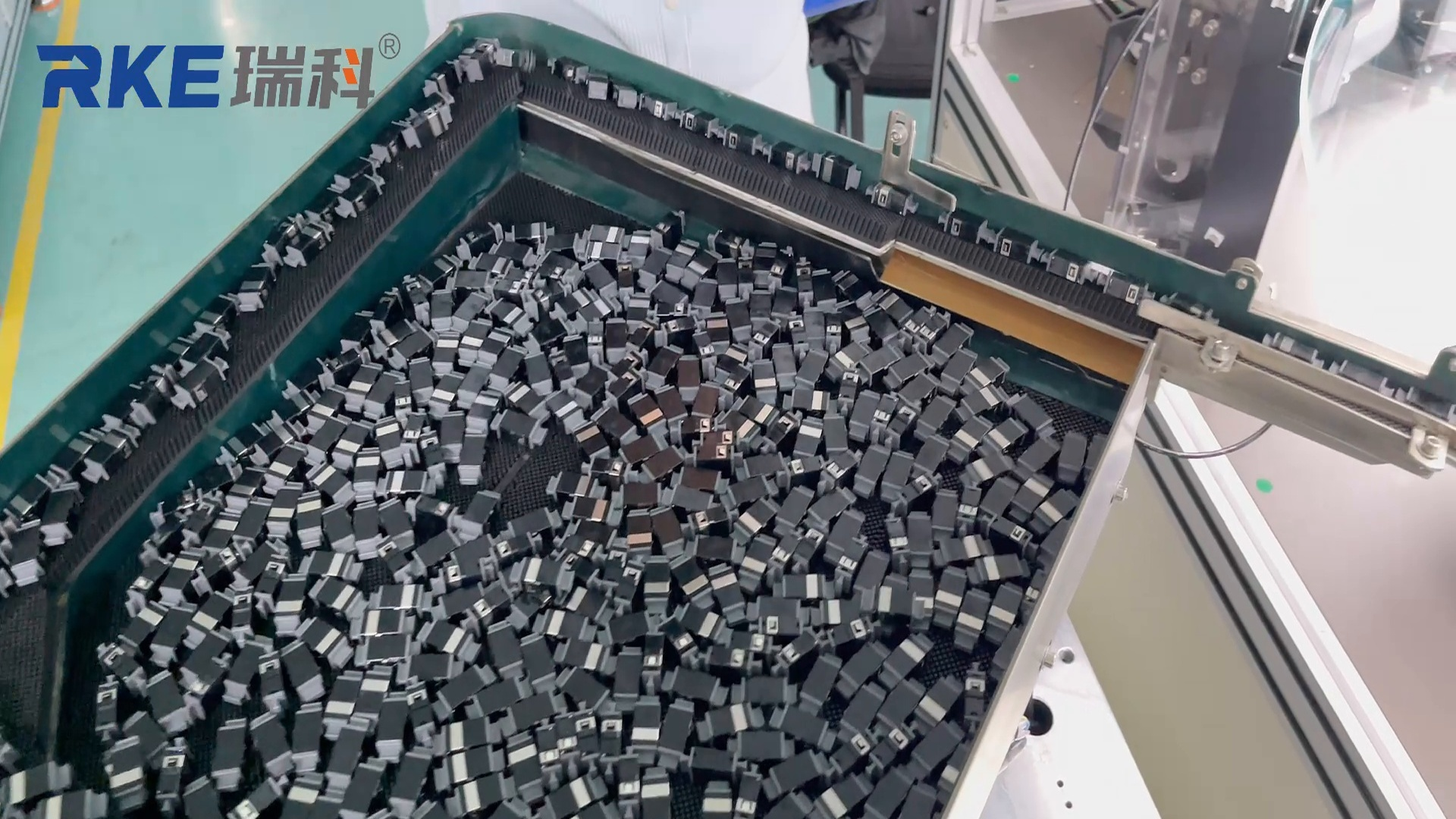
The feeding system therefore does more than move products. It also helps create a stable starting point for the entire inspection process.
Ten CCD Cameras Provide Multi-View Inspection
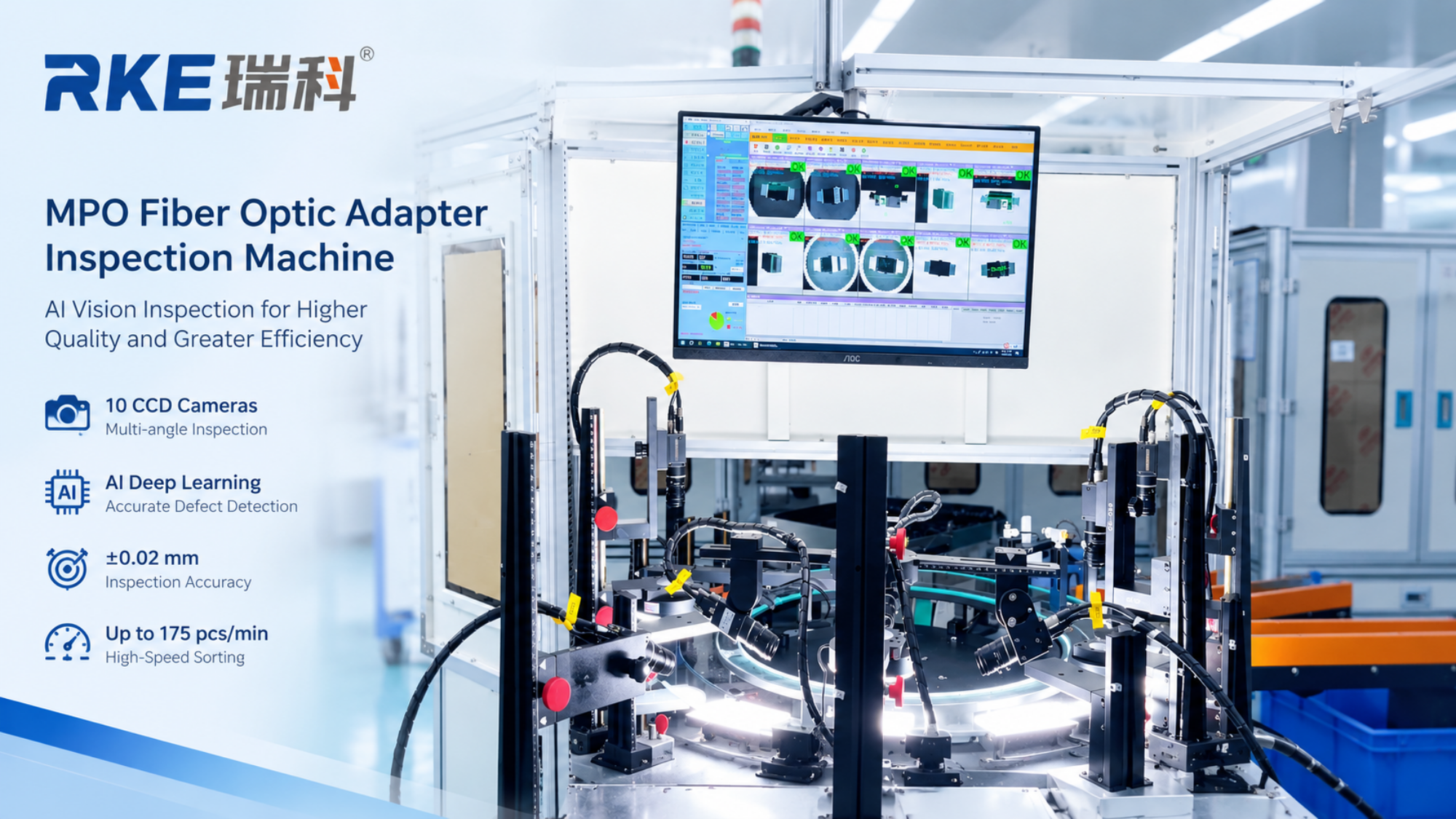
The demonstrated machine uses 10 CCD industrial cameras.
Instead of relying on a single image, the system captures the MPO fiber optic adapter from different viewing positions. Each camera focuses on specific areas or inspection requirements.
This multi-camera setup allows the system to check several visible features during the same production cycle. In addition, controlled lighting helps create clearer images for the inspection software.
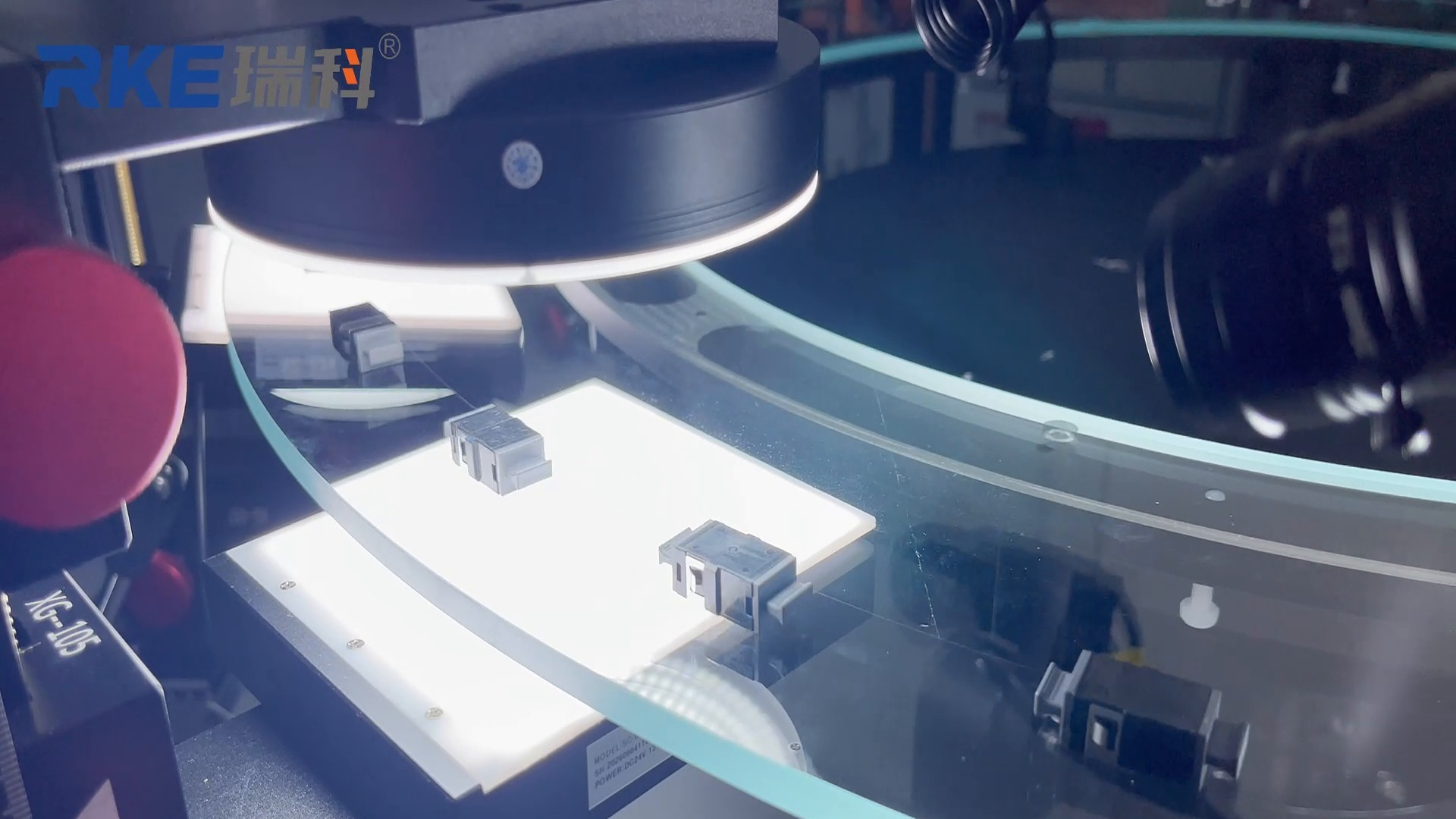
Multi-camera inspection area with 10 CCD industrial cameras.
The system also uses a glass-plate conveying structure to move and position the adapters through the inspection area. Therefore, the cameras can inspect the products under controlled and repeatable conditions.
AI Vision Inspection Targets Real Production Defects
The inspection process goes beyond a simple pass-or-fail image comparison.
In this application, the video demonstrates several practical inspection points. These include:
- Reversed spring clips
- Missing dust caps
- Missing dots
- Reversed housings
- Scratches
- Other appearance defects
The inspection criteria can also follow the customer’s product drawings and quality standards. This approach allows manufacturers to define specific defects according to their actual production requirements.
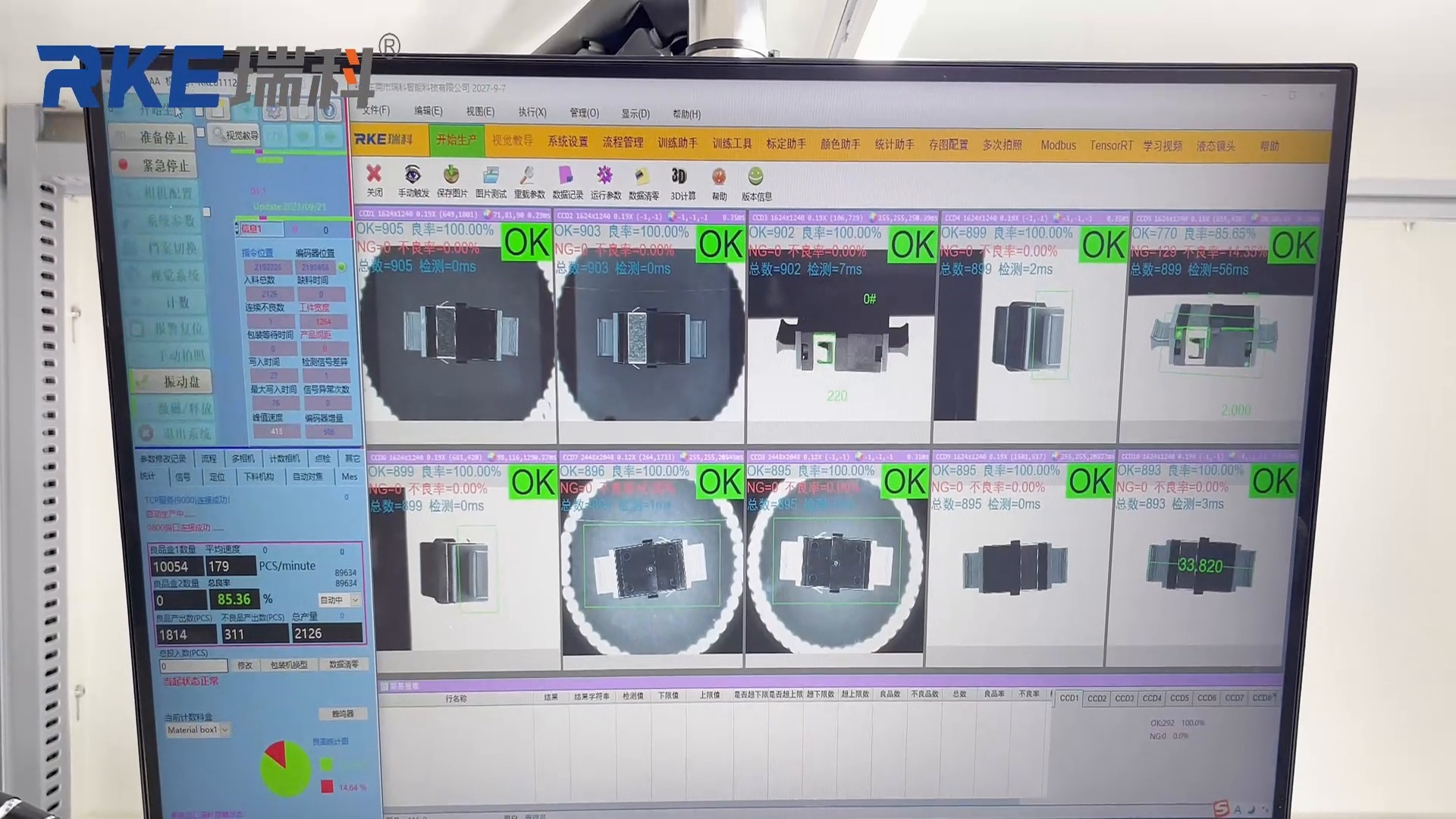
Moreover, AI-based image analysis can help the system identify predefined product conditions automatically. This reduces the need for operators to inspect every component manually.
Automated Sorting Separates OK and NG Products
After the cameras capture the required images, the vision software analyzes the inspection results.
The system then classifies each product according to the configured inspection rules. Qualified products continue through the production flow, while defective products move toward the corresponding NG output.
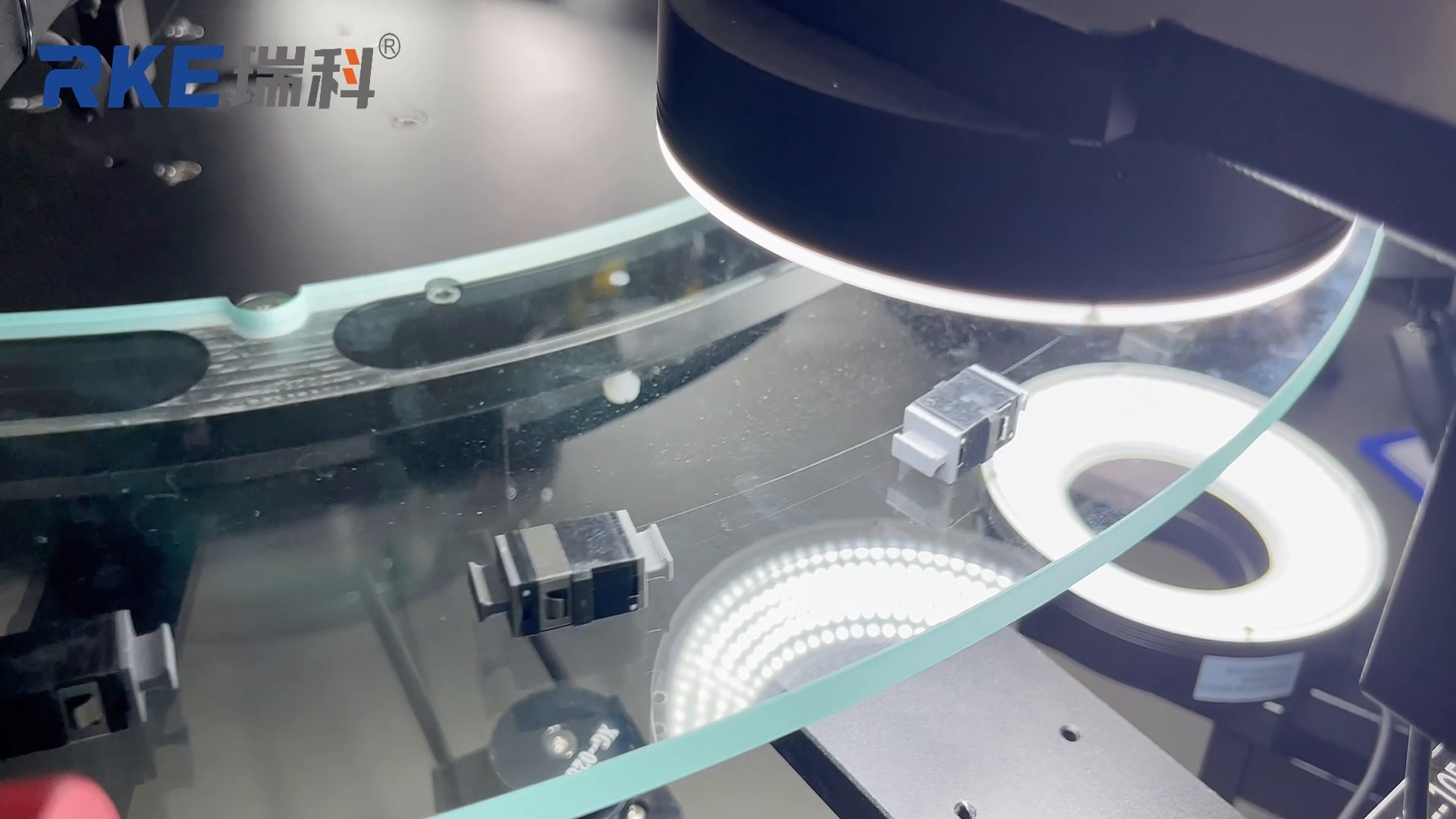
An outfeed conveyor appears in the demonstrated application. It creates a continuous path from inspection to discharge.
As a result, operators do not need to manually separate every inspected adapter. The machine handles inspection and sorting as part of the same automated process.
Real-Time Inspection Results Support Production Monitoring
The inspection software provides a live view of camera images and production data.
In the demonstrated application, the software interface displays a production rate of approximately 175 pcs/min. It also shows a detection accuracy of ±0.02 mm.
However, these figures describe this specific video demonstration rather than universal machine specifications. Actual speed and accuracy can vary depending on product geometry, defect definitions, feeding stability, optical configuration, lighting and inspection requirements.
Therefore, manufacturers should evaluate machine performance through product samples and application testing before finalizing an inspection configuration.
Why Automated Vision Inspection Matters for Optical Components
For optical components, the challenge often comes from many small inspection points rather than one complicated defect.
As production volume increases, manual inspection can become difficult to standardize. Operators may also need to check assembly orientation, missing features, surface conditions and other details at the same time.
An MPO Fiber Optic Adapter Inspection Machine can bring these inspection tasks into one controlled process.
For example, the camera arrangement can cover different product views. At the same time, AI vision software can analyze predefined defects and classify the inspection results. The sorting system can then separate qualified and defective products automatically.
In this way, machine vision can support both quality inspection and production efficiency.
A Customized Approach to MPO Fiber Optic Adapter Inspection
This RKE application focuses on the specific MPO fiber optic adapter shown in the production video.
The feeding method, 10-camera arrangement, lighting conditions, inspection points and output process all work together as one inspection solution. However, different MPO adapters may require different inspection configurations.
For this reason, RKE can adjust the vision inspection process according to the actual product structure and quality requirements. Sample testing can help determine suitable camera positions, lighting, inspection criteria and sorting methods.
Ultimately, the goal is not simply to add more cameras. Instead, the inspection system should match the product, the defects and the production process.
Conclusion
This MPO fiber optic adapter application shows how AI vision inspection can combine multi-camera imaging, automated feeding and product sorting in one production process.
With 10 CCD industrial cameras, AI-based inspection and automated OK/NG classification, the system can address assembly and appearance inspection requirements for MPO fiber optic adapters.
The demonstrated application also shows a displayed production rate of approximately 175 pcs/min and ±0.02 mm detection accuracy. Actual performance, however, depends on the specific product and inspection requirements.
For manufacturers looking to automate MPO fiber optic adapter inspection, application testing provides a practical way to determine the right inspection configuration.