Why Ceramic Ring Inspection Needs Consistency
Ceramic rings may look simple, but their production quality depends on consistent dimensions, shape and surface condition. When production volume increases, checking these details manually can become difficult to standardize.
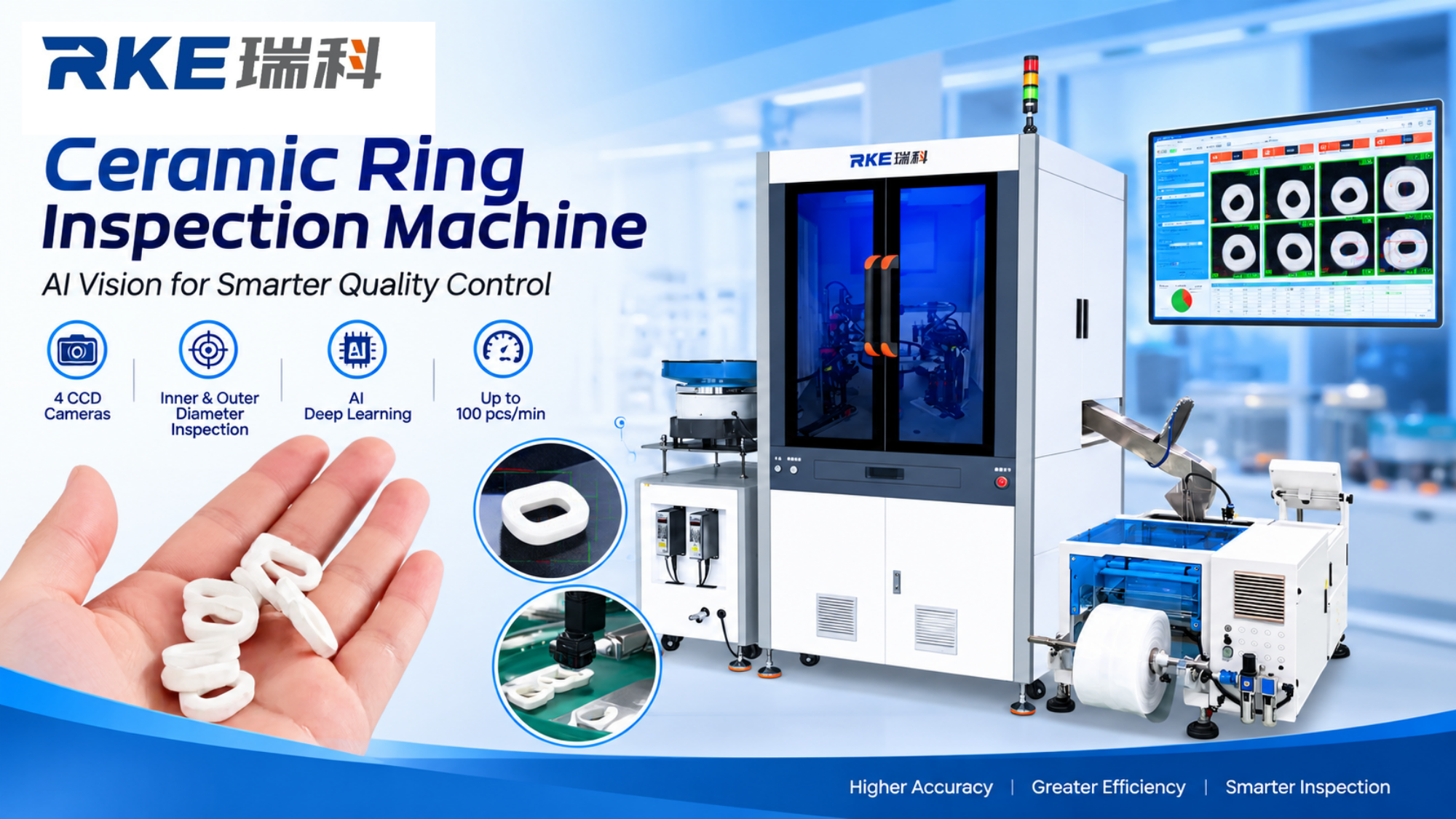
This RKE application shows a different approach. The system combines vibratory feeding, CCD machine vision, AI-based image analysis and automated sorting in one continuous process. Instead of relying on occasional manual checks, the machine captures and analyzes products as they move through the inspection area.
Stable Feeding Starts the Inspection Process
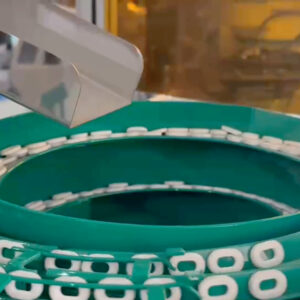
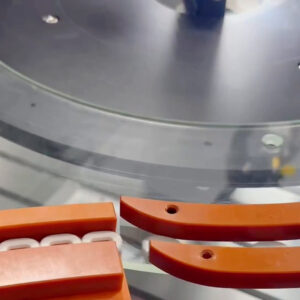
First, the ceramic rings enter a vibratory bowl feeder. The feeder separates the parts and guides them toward the inspection section.
Stable presentation matters because the cameras need a repeatable view of each ring. When the products arrive in a controlled position, the inspection software can compare images and measurements under more consistent conditions.
The video shows a continuous flow of ceramic rings from the feeder toward the inspection stations. This setup creates the foundation for the later vision and sorting steps.
Four CCD Cameras Capture Inspection Images
The demonstrated system uses four CCD industrial cameras. Each camera supports a defined inspection view, allowing the system to collect more information than a single-camera setup.
The cameras work with controlled lighting and a glass-plate conveying structure. As the ceramic rings move through the inspection area, the system captures images for software analysis.
This multi-camera arrangement is useful when one view cannot provide all the information required for a product inspection.
AI Vision Checks Product Conditions
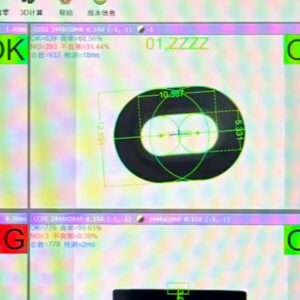
The inspection software displays individual product images together with OK and NG results. The system can apply predefined inspection rules to identify abnormal conditions.
In the demonstrated application, the software checks ceramic ring images and provides visual results for production monitoring. Manufacturers can define inspection criteria around the actual product, drawings and quality requirements.
As a result, the machine can turn visual inspection into a repeatable production step instead of leaving every decision to manual inspection.
Dimensional Inspection Supports Drawing Requirements
Dimensional inspection is another important part of the application. The software interface shows measurement graphics for the ceramic ring, including the inner and outer diameter areas.
The video demonstrates a detection accuracy of ±0.01 mm. This value belongs to the demonstrated application and should not be treated as a universal specification. Actual performance depends on product geometry, material, lighting, camera selection, calibration and inspection requirements.
For manufacturers with tighter dimensional requirements, sample testing can help determine the suitable optical and measurement configuration before equipment deployment.
Automated Sorting Keeps the Process Continuous
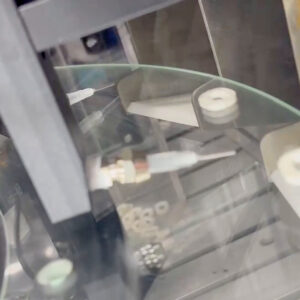
After inspection, the system moves the ceramic rings toward the output section. The video shows products traveling through the sorting area after the vision inspection stage.
This approach connects feeding, inspection and sorting into one workflow. Therefore, operators do not need to manually check and separate every part. The machine can classify products according to the configured inspection criteria and maintain a continuous production flow.
What the Demonstrated Application Shows
The production interface provides a real-time view of inspection results. In the video demonstration, the system shows a production speed of approximately 100 pcs/min and a detection accuracy of ±0.01 mm.
These values describe the demonstrated ceramic ring application. They can change when the product size, shape, inspection points, feeding method or quality requirements change.
For this reason, application testing remains an important step when developing an automated ceramic ring inspection solution.
A Practical Approach to Ceramic Ring Inspection
A useful vision inspection system should start with the product rather than a fixed machine template. Ceramic rings can have different dimensions, materials, surface finishes and quality criteria.
For that reason, RKE can evaluate samples and define the inspection process around the customer’s actual requirements. The evaluation can cover feeding stability, camera positions, lighting, dimensional measurement, AI inspection rules and sorting logic.
The goal is a repeatable inspection process that fits the production line and provides clear results for quality control.
About RKE Intelligent Technology
RKE Intelligent Technology develops machine vision inspection and automated sorting solutions for industrial applications. Its solutions cover dimensional inspection, appearance inspection, AI vision, CCD inspection and customized automation.
For ceramic rings and other precision components, the inspection configuration can be developed around the product structure and the customer’s quality standards.
Frequently Asked Questions
What can a ceramic ring inspection machine check?
Depending on the application, the system can inspect dimensions, inner and outer diameters, shape, appearance and predefined product defects.
How many cameras does the demonstrated system use?
The demonstrated application uses four CCD industrial cameras.
What accuracy does the video demonstrate?
The video demonstrates ±0.01 mm detection accuracy for this application.
Is 100 pcs/min a fixed machine speed?
No. The video shows approximately 100 pcs/min in the demonstrated application. Actual speed depends on the product and system configuration.
Talk to RKE About Your Inspection Application
If you are evaluating automated ceramic ring inspection, RKE can review product samples and inspection requirements to determine a suitable vision and sorting configuration.