When small molded components run at production speed, visual inspection can become difficult to keep consistent. Dust plugs may look simple, but small differences in geometry, molding quality or surface condition can affect assembly and product quality. This RKE application shows how machine vision can turn these inspection points into a continuous automated process.
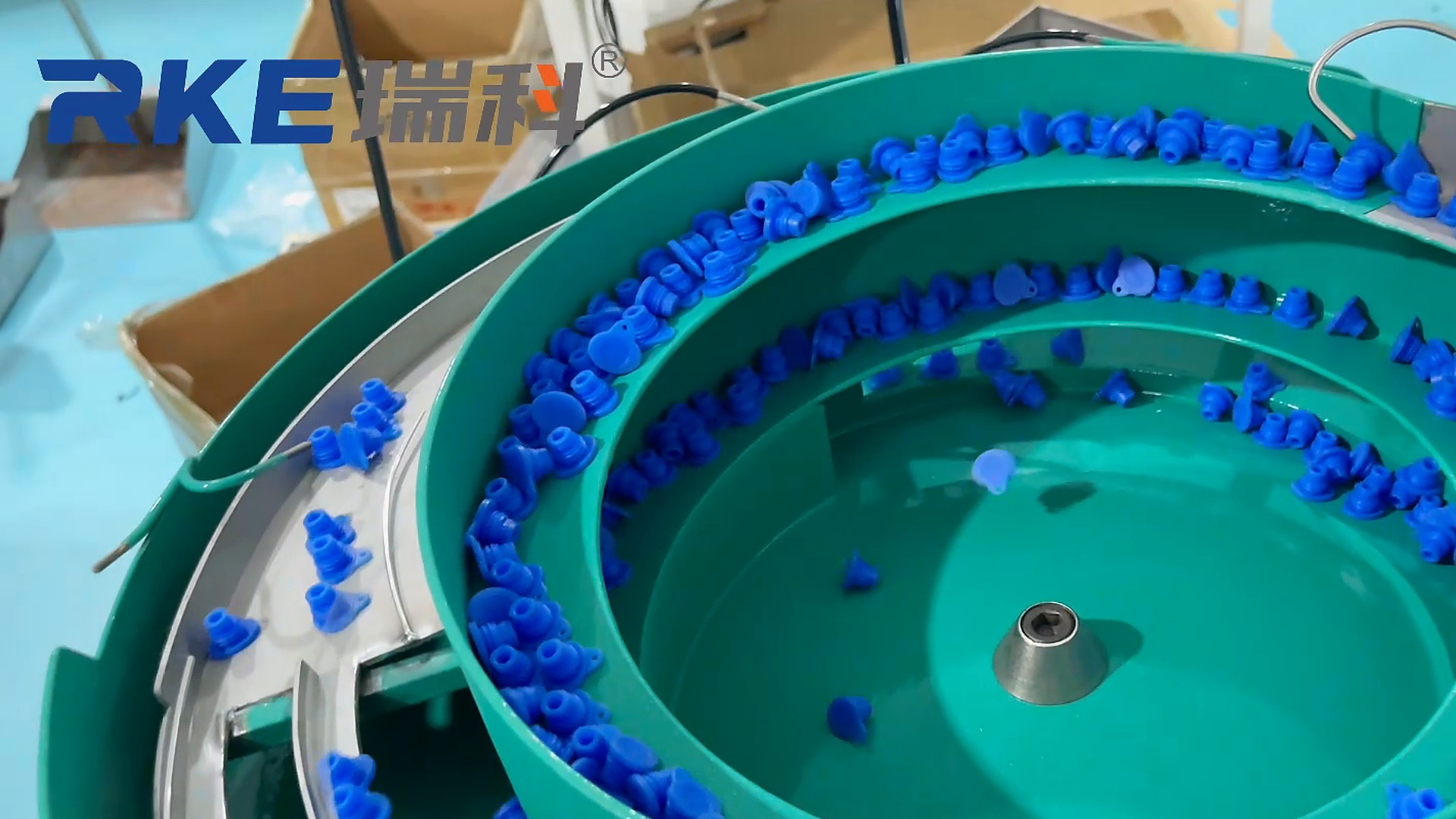
Stable Feeding Creates a Continuous Inspection Process
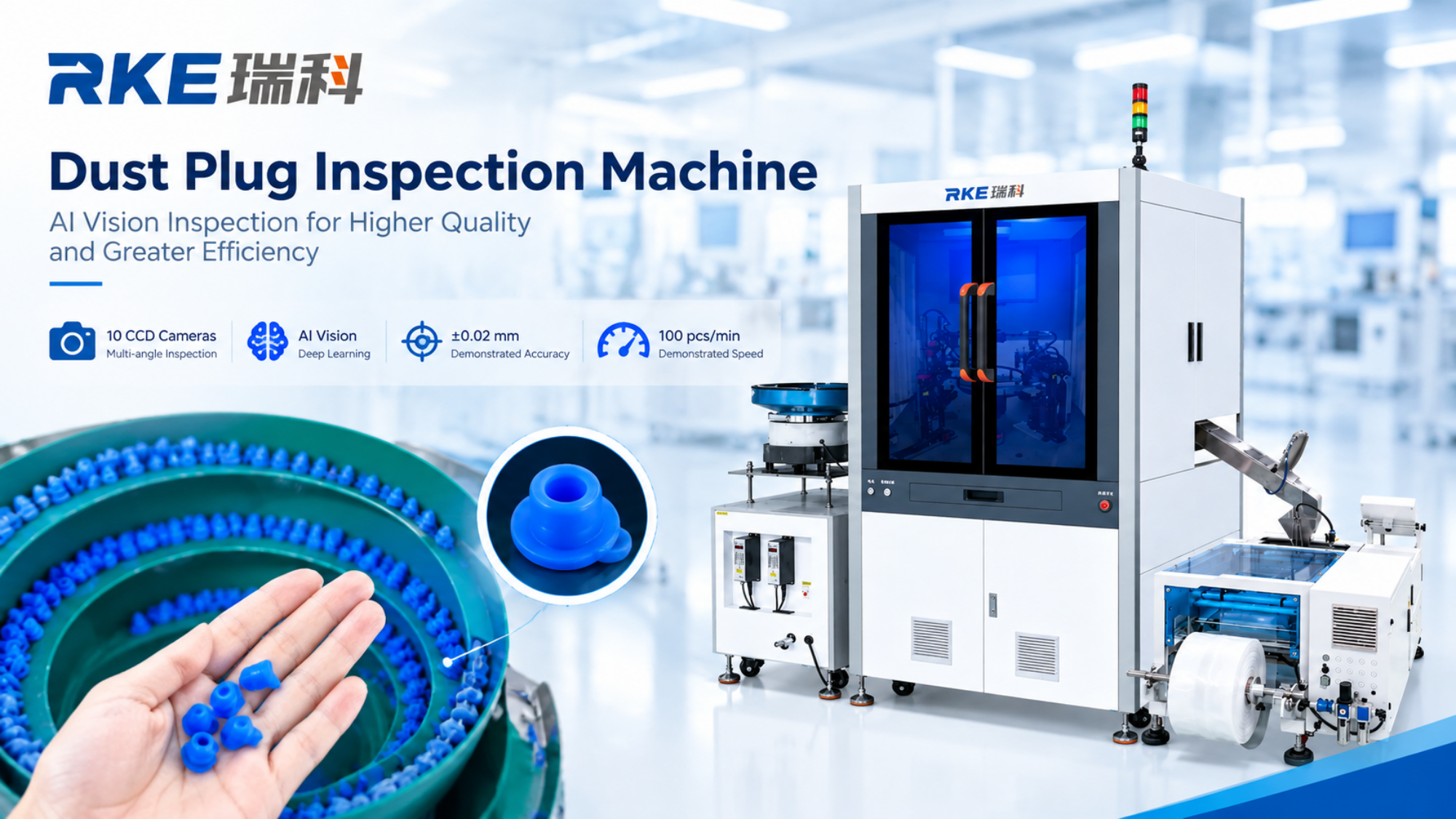
The process starts with a vibratory bowl feeder that separates and orients the dust plugs before they enter the inspection section. Stable feeding matters because the vision system needs each component to arrive in a predictable position. The application then transfers the parts along the inspection track for camera-based analysis.
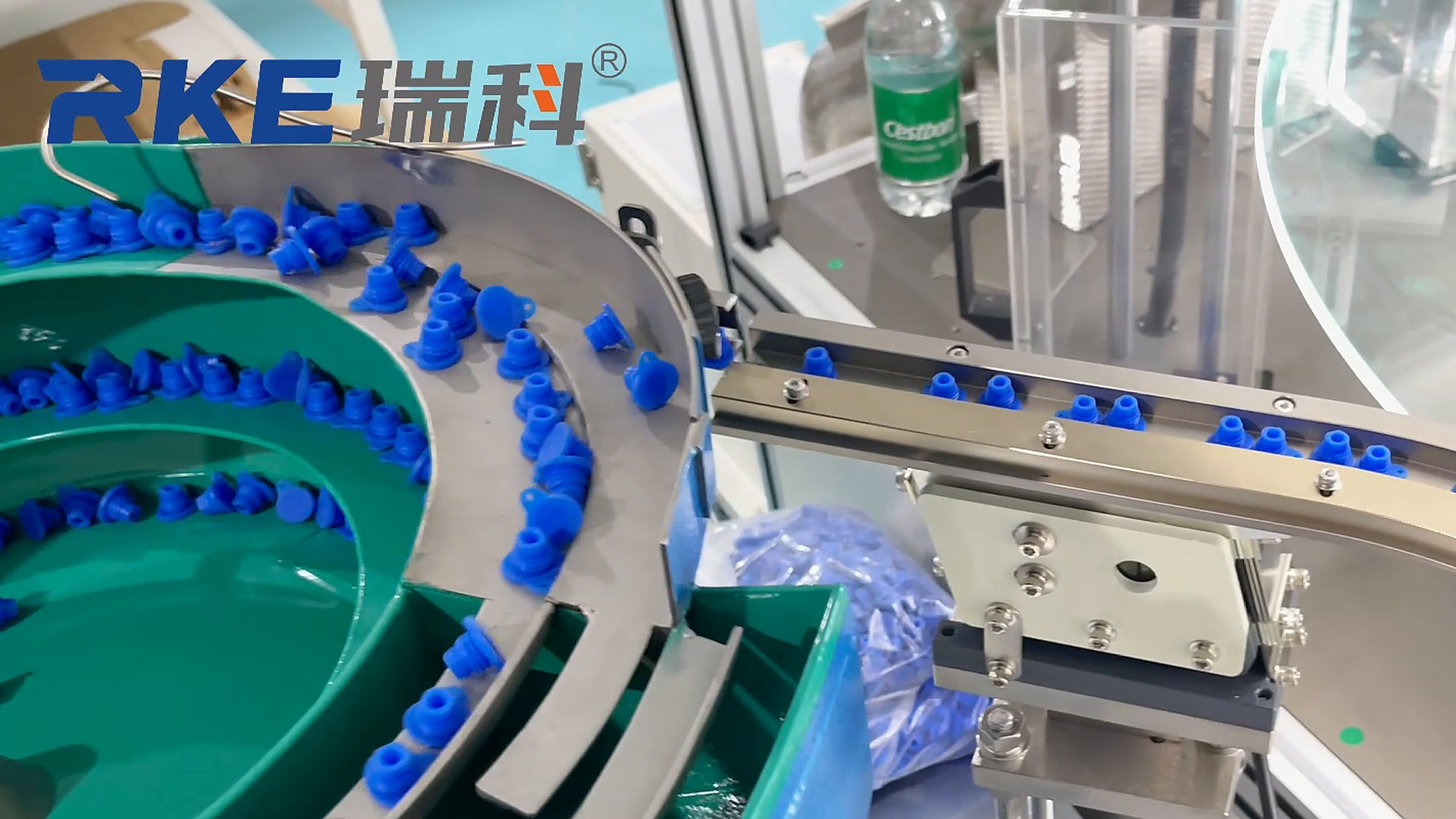
Ten CCD Cameras Provide Multi-View Inspection
The machine is equipped with 10 CCD industrial cameras. Multiple viewing positions allow the system to inspect different features of the dust plug instead of relying on a single image. This setup is useful for small plastic components where the outer profile, top view and other visible features need to be checked during the same production cycle.
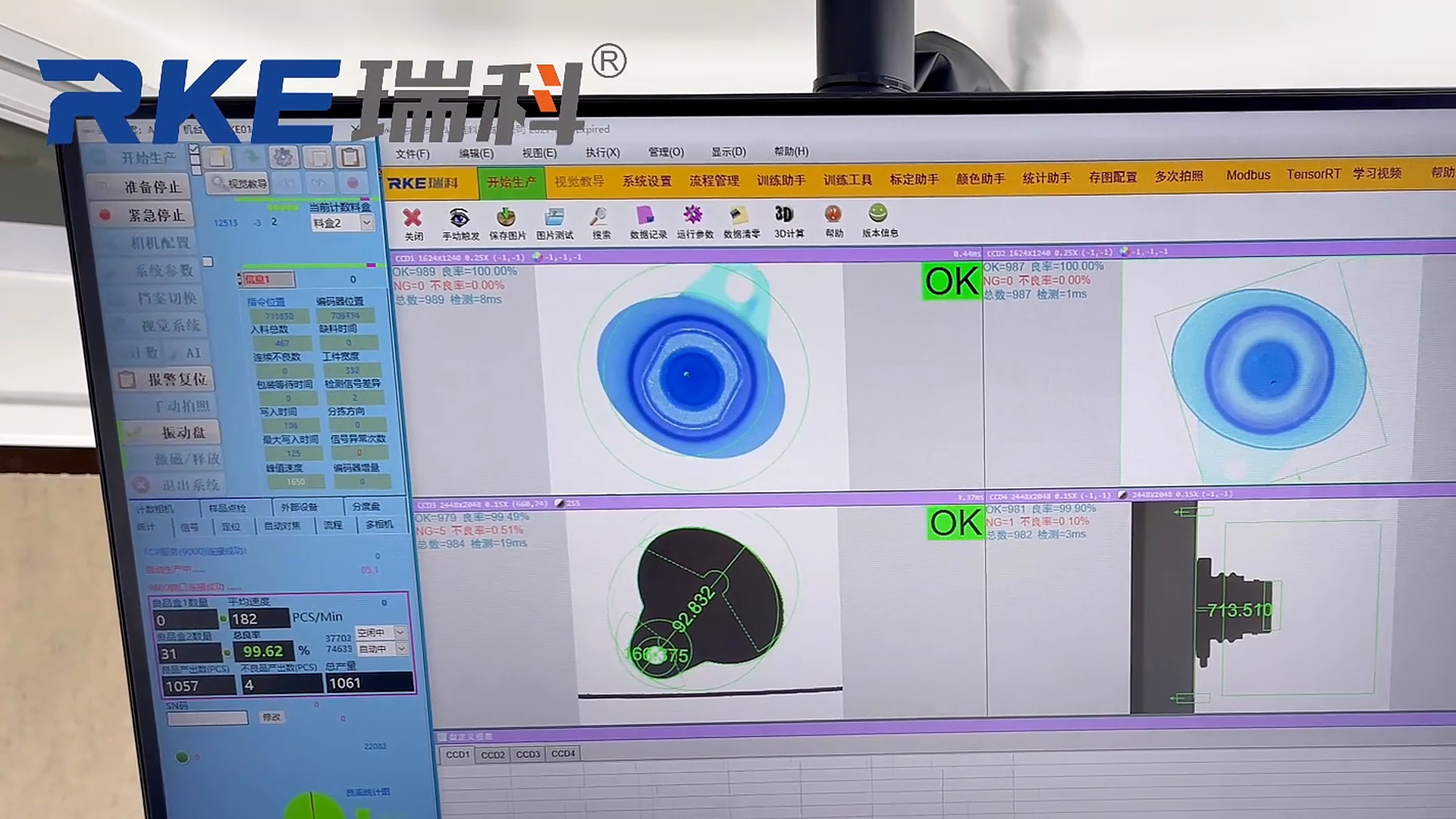
Dimensional Inspection Focuses on Key Geometry
For dust plugs, dimensional consistency is an important part of automated quality control. In this application, the vision system measures product features including outer diameter and height. The video demonstrates a detection accuracy of ±0.02 mm for this application. Actual performance can vary with product geometry, material, lighting, camera configuration and inspection requirements.
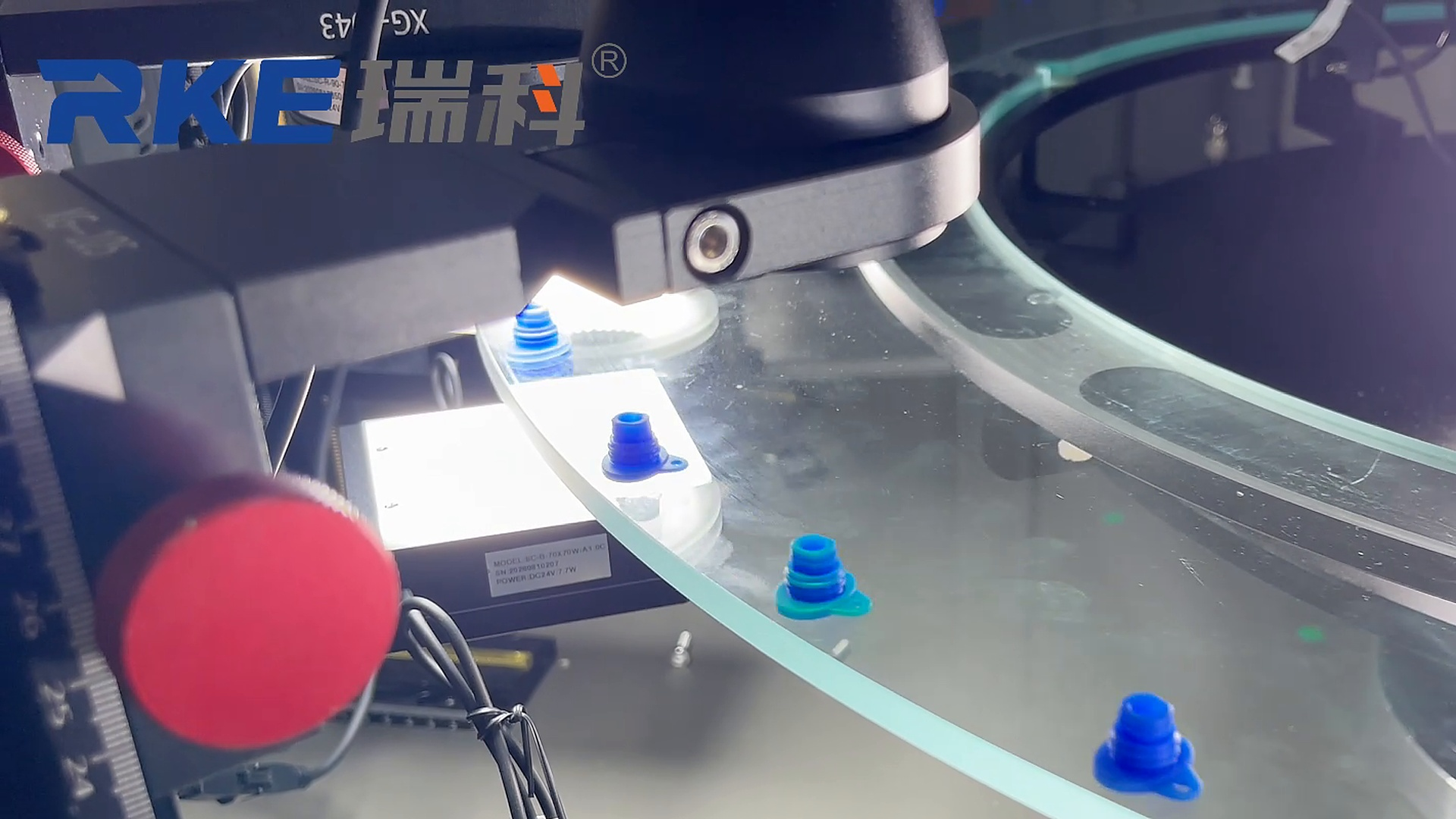
AI Vision Checks Molding and Appearance Defects
Dimension alone does not describe the complete quality of a molded component. The system also uses RKE self-developed AI deep-learning inspection software to analyze appearance and product conditions. The application demonstrates checks for issues such as short-shot areas, excess material, discoloration, blocked holes, flash, foreign objects and cracks. These inspection points can be configured around the customer’s product and defect criteria.
Automatic Quality Classification at Production Speed
After inspection, the system identifies products according to the configured quality criteria and supports automated visual sorting. The production interface in the video displays a demonstrated inspection speed of 100 pcs/min. This allows manufacturers to move from sample-based manual checking toward continuous inspection of parts on the production line.
A Practical Vision Inspection Solution for Dust Plugs
This application combines automated feeding, multi-camera imaging, dimensional inspection, AI-based appearance analysis and quality classification in one production process. For manufacturers producing dust plugs and similar molded components, the main value is not simply taking pictures. It is creating a repeatable inspection method that can check defined quality points while the line continues to run.
Because every product and defect standard is different, the final camera arrangement, lighting, software criteria and sorting method should be selected according to the actual part. RKE can use product samples and inspection requirements to define the appropriate machine vision configuration for a specific application.
About RKE Intelligent Technology
DongGuan RKE Intelligent Technology focuses on machine vision inspection, AI visual inspection and automated sorting solutions for industrial components. Its applications cover hardware, fasteners, electronics, automotive parts, plastic and rubber components, new energy products and other precision manufacturing fields. Learn more at www.rkecn.com.
Conclusion
The dust plug case demonstrates how machine vision can combine dimensional and appearance inspection in a single automated workflow. With 10 CCD cameras, AI vision analysis, automated classification and a demonstrated inspection accuracy of ±0.02 mm, the application provides a practical example of automated quality control for small molded components.