Small electronic components often require consistent inspection before they move to the next production stage. Their compact size and high production volume can make manual inspection difficult to maintain.
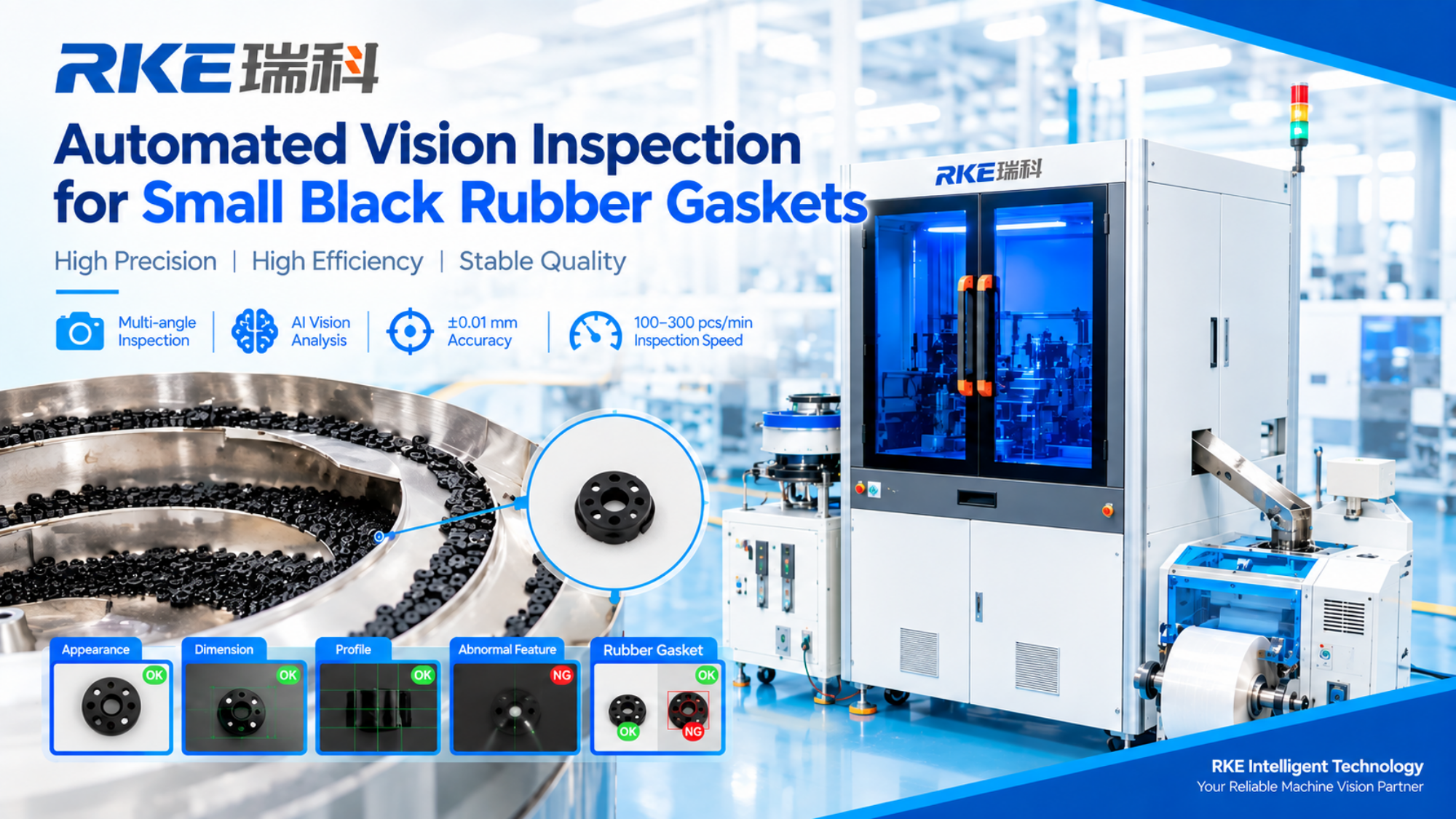
This RKE application uses automated feeding and machine vision inspection to organize and inspect small inductive components during continuous production. By combining controlled part handling with multiple inspection views, the system helps manufacturers build a more repeatable quality-control process.
Automated Feeding Keeps Components Moving Consistently
The inspection process starts with a vibratory bowl feeder.
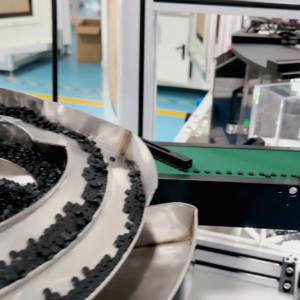
As shown in the application, a large number of small inductive components enter the bowl and move along the spiral track. The vibration gradually separates and aligns the components before they reach the inspection area.
This feeding method provides a continuous supply of parts for the vision system. It also helps maintain a more stable product position during inspection
Controlled Product Positioning Supports Vision Inspection
After leaving the bowl, the components move along the feeding track toward the inspection station.
Consistent positioning matters because the vision system needs a stable view of each component. Therefore, the feeding and positioning process works together with the camera inspection system to create a repeatable inspection path.
This approach also reduces the need for operators to manually place individual components before inspection.
Multi-Camera Vision Inspection for Small Components
Once the components reach the inspection station, industrial CCD cameras capture the required views.
Multiple cameras allow the system to examine different surfaces and features of the component. As a result, the inspection does not depend on a single viewing angle.
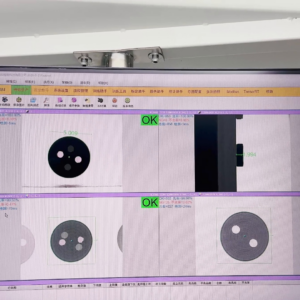
The system can process the captured images through vision software and compare the detected features with predefined inspection criteria.
AI Vision Helps Identify Abnormal Components
The vision software analyzes the images captured during production.
Depending on the customer’s inspection requirements, the system can evaluate product appearance, geometry and other defined quality characteristics. The software then classifies the inspection result and identifies products that do not meet the configured criteria.
This automated process helps manufacturers apply the same inspection logic to each component instead of relying entirely on manual visual judgment.
Automated Inspection for High-Volume Production
Small components can arrive at high speed when production volume increases. Under these conditions, manual inspection can become repetitive and difficult to keep consistent.
Automated vision inspection provides a more structured alternative. The system continuously feeds components, captures inspection images and evaluates the results in sequence.
As a result, manufacturers can reduce repetitive manual checking while maintaining a more consistent inspection process.
From Feeding to Quality Classification
The complete process connects several stages:
- Vibratory feeding
- Controlled component positioning
- Multi-camera image acquisition
- Vision-based analysis
- OK/NG classification
- Automated sorting
Each stage supports the next one. Therefore, the inspection process can operate continuously rather than relying on separate manual inspection steps.
Why Machine Vision Matters for Inductive Components
For small inductive components, visual inspection often involves many individual parts and repeated quality checks.
Machine vision can help manufacturers standardize this process. Instead of inspecting only selected samples, an automated system can evaluate components continuously according to predefined inspection rules.
More importantly, the inspection criteria can be developed around the actual product and production requirements. Camera quantity, lighting, feeding method and software inspection logic can all be configured according to the application.
A Practical Automated Inspection Solution
This application demonstrates how automated feeding and machine vision can work together for small-component inspection.
The vibratory bowl provides a continuous supply of components, while the vision system captures and analyzes the products as they move through the inspection process.
For manufacturers looking to improve inspection consistency and reduce repetitive manual checking, a customized machine vision inspection system can provide a practical solution for high-volume production.
About RKE Intelligent Technology
DongGuan RKE Intelligent Technology develops machine vision inspection and sorting solutions for precision components and automated production.
RKE solutions can combine automated feeding, industrial cameras, AI vision software, dimensional inspection, appearance inspection and automated sorting according to the customer’s product characteristics and quality requirements.