Plastic Cap Visual Sorting Inspection for Automated Quality Control
Plastic caps are used in packaging and a wide range of consumer and industrial products. Their appearance and consistency can affect both product presentation and downstream assembly. When operators inspect caps manually, results may vary between shifts, while repetitive visual checks can become difficult to maintain as production volume increases.
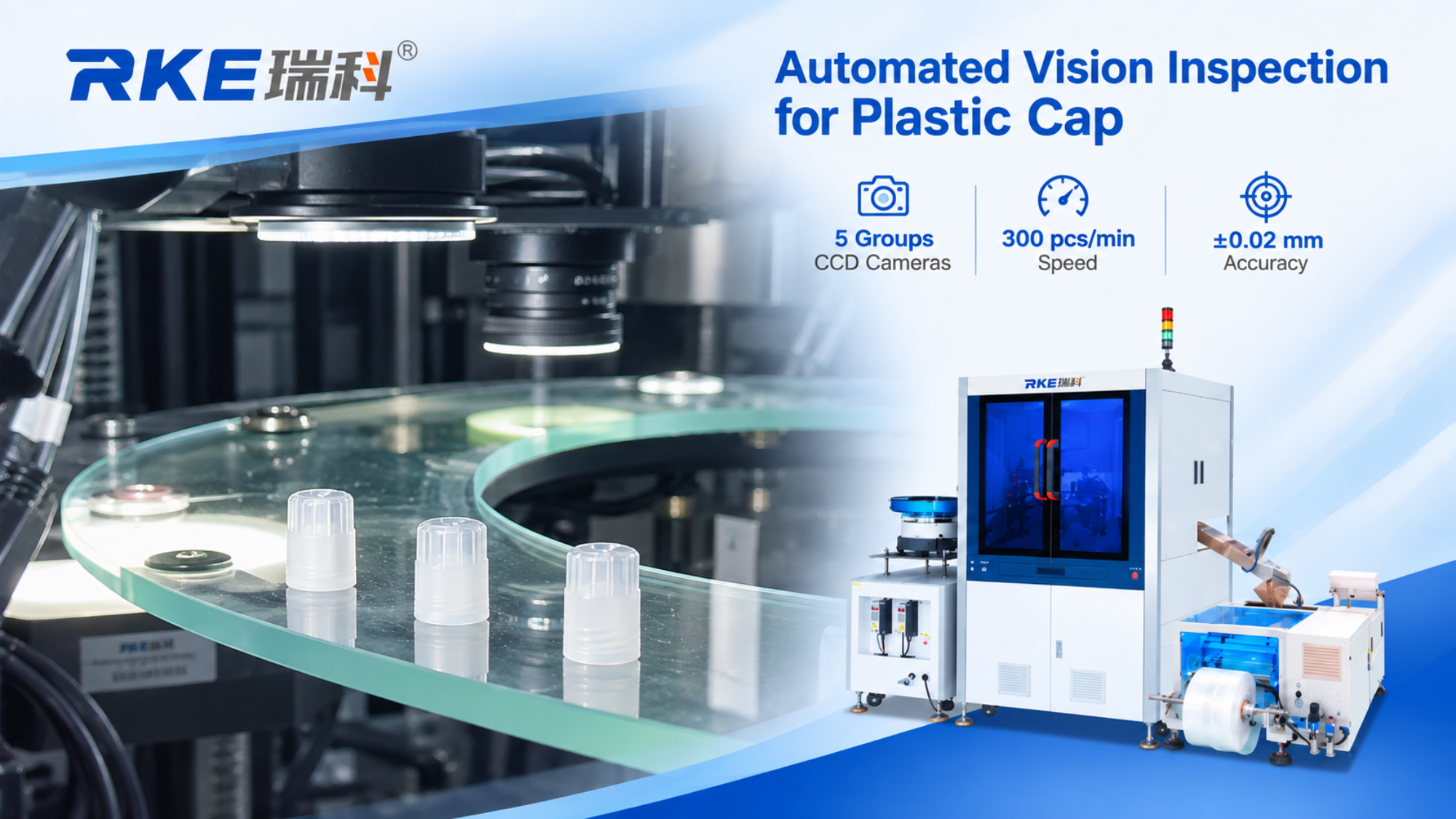
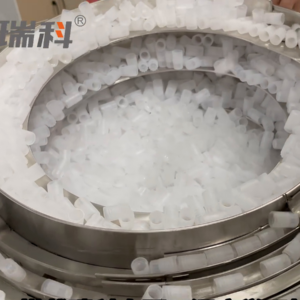
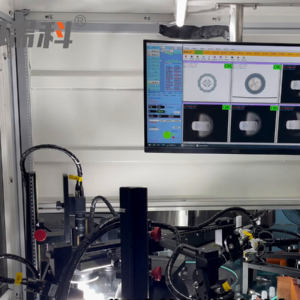
A **Plastic Cap Visual Sorting Inspection** system helps manufacturers apply defined inspection criteria in a repeatable process. In the RKE demonstration, plastic caps are supplied by a vibratory bowl feeder and pass through a vision inspection station. The machine uses five sets of CCD industrial cameras together with RKE-developed AI deep-learning inspection software to capture and evaluate product images.
Common Appearance Issues and Inspection Criteria
Plastic cap inspection requirements should be defined according to the product drawing, customer specification, and actual application. Depending on the cap design, manufacturers may need to check visible surface marks, scratches, contamination, incomplete features, deformation, or other appearance variations. The exact defect list and acceptance limits must be confirmed with representative good and defective samples.
A clear inspection standard is essential. It should identify the areas to inspect, the defect conditions that require rejection, and the acceptable range of normal material or color variation. This gives the vision system a consistent reference for evaluating each part.
How the Plastic Cap Visual Sorting Process Works
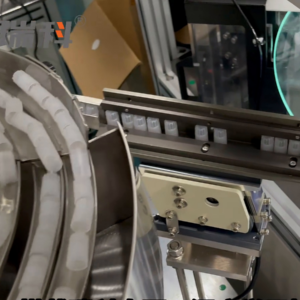
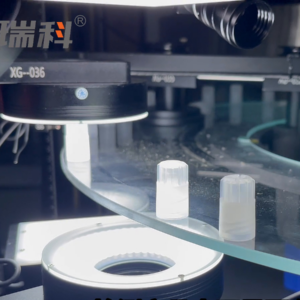
The demonstrated process starts with vibratory bowl feeding, which organizes and delivers the plastic caps toward the inspection area. The parts then move along a guided transfer path so that they can be presented for image capture.
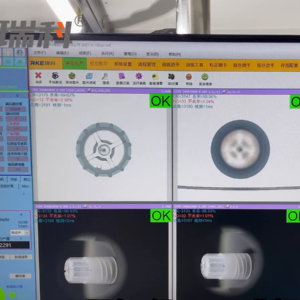
At the inspection station, the CCD cameras work with the lighting arrangement to capture multiple views of each cap. RKE’s AI deep-learning inspection software evaluates the captured images against the configured criteria and displays the inspection results on the monitoring interface.
After inspection, the parts continue to the downstream discharge conveyor. The video shows conveyor discharge; the exact OK/NG separation and reject mechanism should be confirmed for the final machine configuration rather than assumed from the footage.
Four Practical Benefits of Automated Visual Sorting
More consistent inspection: A configured vision process applies the same inspection rules to parts throughout the production run. Its reliability should be verified using representative defect samples and agreed acceptance criteria.
Higher inspection efficiency: The demonstrated application lists a speed of 300 pcs/min, helping reduce dependence on repeated manual visual checks. Actual throughput depends on cap geometry, feeding stability, inspection coverage, and the required criteria.
Application-based customization: Camera positions, lighting, software parameters, and inspection views can be evaluated against the customer’s cap design and quality requirements. Sample testing helps establish a suitable configuration.
Clearer inspection review: The software interface presents captured images and result indicators, helping operators review the configured inspection outcome. Any data storage, traceability, or reporting functions should be confirmed against the selected software configuration.
Suitable Industries and Applications
Automated plastic cap inspection may be relevant to manufacturers of packaging components, closures, household product accessories, personal-care packaging, and other molded plastic parts. Suitability depends on the component’s shape, material, surface finish, production conditions, and the quality requirements of the end product.
Frequently Asked Questions
What does a plastic cap visual sorting machine inspect?
The inspection scope is defined by the product drawing and agreed quality criteria. The supplied demonstration shows surface and appearance inspection; specific defect categories should be confirmed through sample testing.
How many cameras are used in the RKE demonstration?
The video identifies five sets of CCD industrial cameras. The required camera arrangement for another cap design may be different.
What is the demonstrated inspection speed?
The video lists a demonstrated speed of 300 pcs/min. Actual output depends on the part and inspection configuration.
What accuracy is shown in the demonstration?
The video states ±0.02 mm for the demonstrated application. This figure should be validated against the customer’s samples, drawings, and measurement requirements.
Can the inspection criteria be customized for different plastic caps?
The inspection plan can be evaluated around the customer’s component and defect requirements. Drawings, good samples, defective samples, and acceptance standards are needed to assess feasibility.