Three-Jaw Copper Post Visual Sorting Inspection for Automated Quality Control
Three-jaw copper posts are precision metal components used in industrial and electrical applications. Their structural features and surface conditions can affect product assembly and overall quality. However, manual inspection becomes difficult to standardize when production volumes increase. Operators may also overlook small defects during repetitive visual checks.
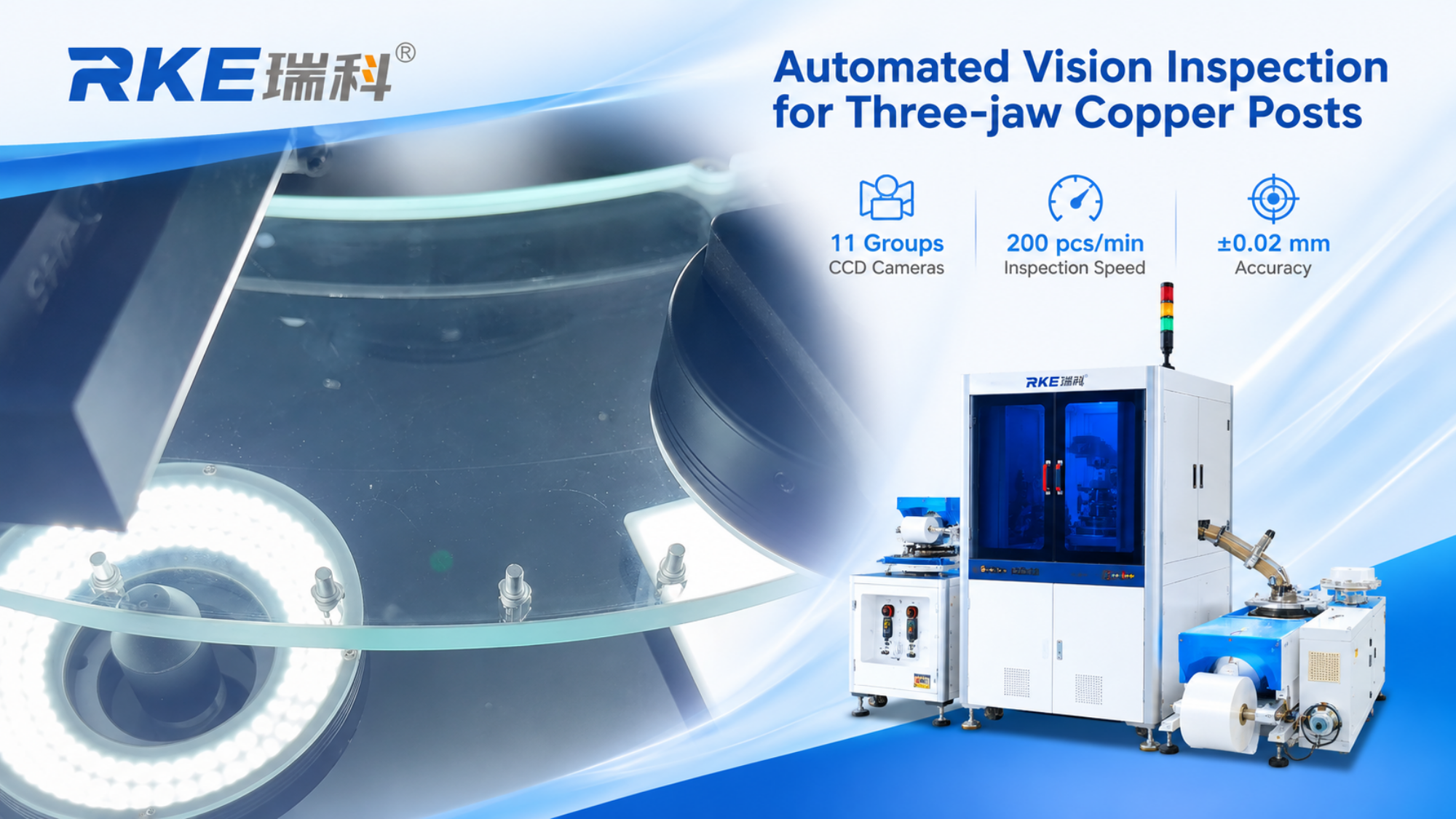
To improve inspection consistency, RKE provides a Three-Jaw Copper Post Visual Sorting Inspection solution. The demonstrated machine combines automatic feeding, industrial CCD cameras, and RKE-developed AI deep-learning inspection software. It captures multiple views of each component and evaluates the images according to configured inspection criteria.
Common Defects and Inspection Requirements
Copper post inspection requires clear quality standards based on the component drawing and customer specifications. Depending on the product design, manufacturers may need to check surface defects, bottom-surface conditions, breakage, white spots, and other visible appearance abnormalities.
The acceptance criteria should distinguish actual defects from acceptable variations. Therefore, manufacturers should prepare representative good and defective samples before configuring the inspection software. These samples help the engineering team establish inspection rules and evaluate detection performance.
How Does the Copper Post Visual Sorting Machine Work?
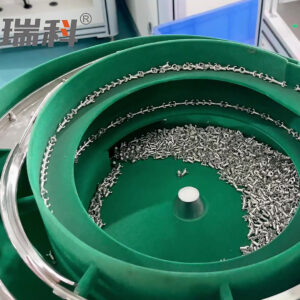
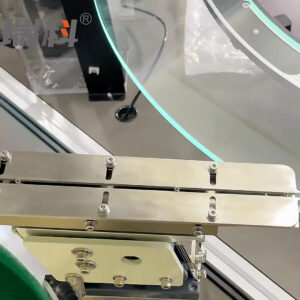
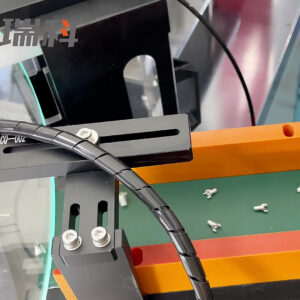
The inspection process begins with a vibratory bowl feeder, which organizes and supplies the copper posts automatically. Next, the components move along the transfer path toward the inspection platform.
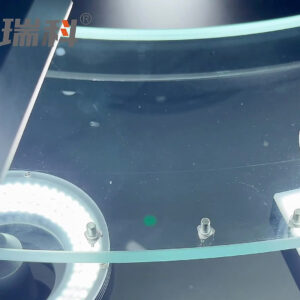
At the inspection station, industrial cameras work with the lighting assemblies to capture images from different positions. The demonstrated machine uses 11 sets of industrial CCD cameras, providing multiple image views for the configured inspection tasks.
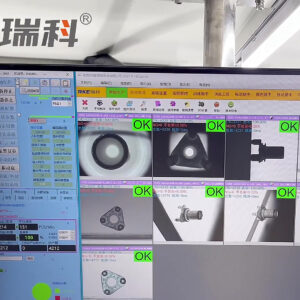
RKE’s self-developed AI deep-learning inspection software then evaluates the captured images against predefined criteria. After inspection, the components move toward the discharge conveyor. The specific OK/NG separation and rejection mechanism should be confirmed according to the final machine configuration.
Four Advantages of Automated Visual Sorting
- More Consistent Quality content.The vision system applies configured inspection criteria throughout production. As a result, manufacturers can reduce dependence on repetitive manual checks. Detection reliability should still be validated using representative defective samples and agreed acceptance standards.
- Improved Production Efficiency. The demonstrated application specifies a detection speed of 200 pcs/min. This provides an automated inspection option for manufacturers handling continuous production.
- Customized Inspection Configuration. Different copper post designs may require different camera angles, lighting conditions, and inspection parameters. For this reason, RKE evaluates the customer’s samples and quality requirements.
- Visual Inspection Result Review. The software interface displays multiple captured images and inspection indicators. This allows operators to review the configured inspection results more conveniently. Additional data storage, counting, and tability functions more conveniently。
Suitable Industries and Applications
Automated copper post inspection may be suitable for manufacturers producing precision metal components for electrical equipment, electronic assemblies, industrial hardware, and related applications.
The actual inspection scope depends on the component’s structure, material, surface finish, dimensional requirements, and production environment. A sample-based evaluation helps determine whether the proposed vision sorting solution meets the application requirements.
Frequently Asked Questions
- What defects can a copper post vision inspection machine detect?
The demonstrated application identifies surface defects, bottom-surface defects, breakage, and white spots as inspection targets. Other defect categories should be confirmed through sample testing.
- How many CCD cameras does the RKE machine use?
The demonstrated Three-Jaw Copper Post inspection machine uses 11 sets of industrial CCD cameras to capture multiple views of the components.
- What is the inspection speed of this machine?
The video specifies a detection speed of 200 pcs/min. Actual production speed may vary depending on the component design and inspection configuration.
- What is the detection accuracy?
The demonstrated application specifies a detection accuracy of ±0.02 mm. The final measurement performance should be validated using customer samples, engineering drawings, and tolerance requirements.
- Can the inspection system be customized for different copper post designs?
Camera positions, lighting, and software inspection parameters can be evaluated according to the component structure and target defects. Manufacturers should provide product drawings, good samples, defective samples, and inspection standards for feasibility testing.
Discuss Your Three-Jaw Copper Post Inspection Requirements
Choosing an automated inspection machine requires more than comparing camera quantities and production speeds. Manufacturers should first define the critical quality requirements and verify inspection feasibility using actual components.
RKE develops machine vision inspection and sorting solutions for industrial parts. Contact our team to arrange sample testing, discuss your inspection requirements, and request a customized quotation.